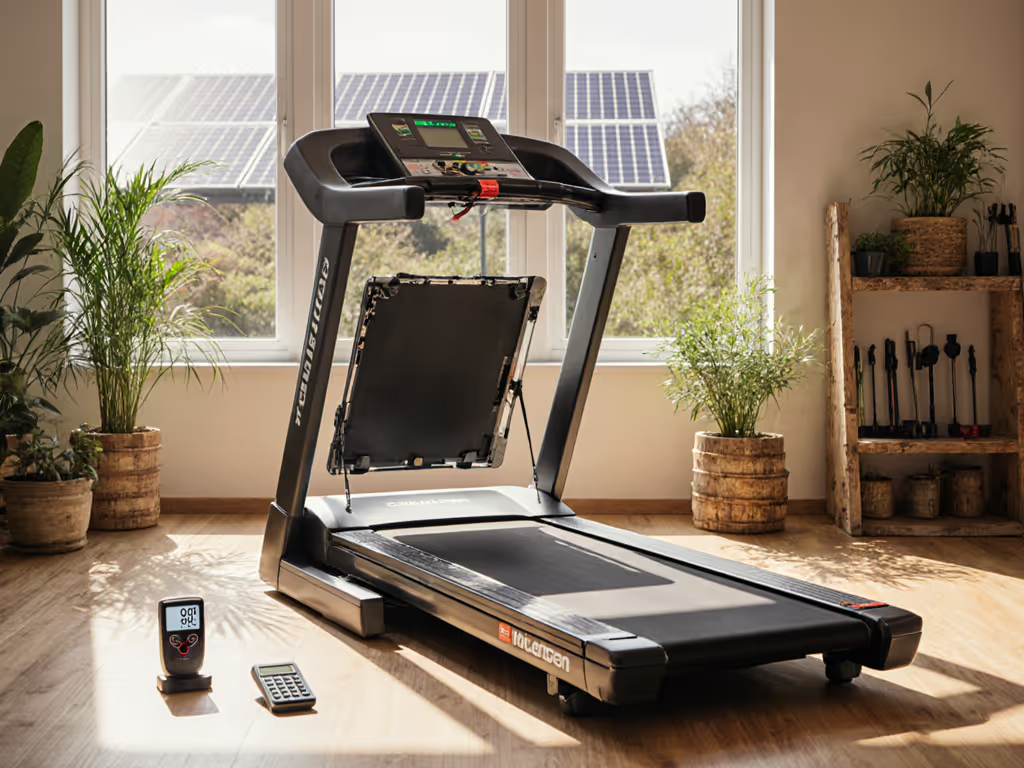
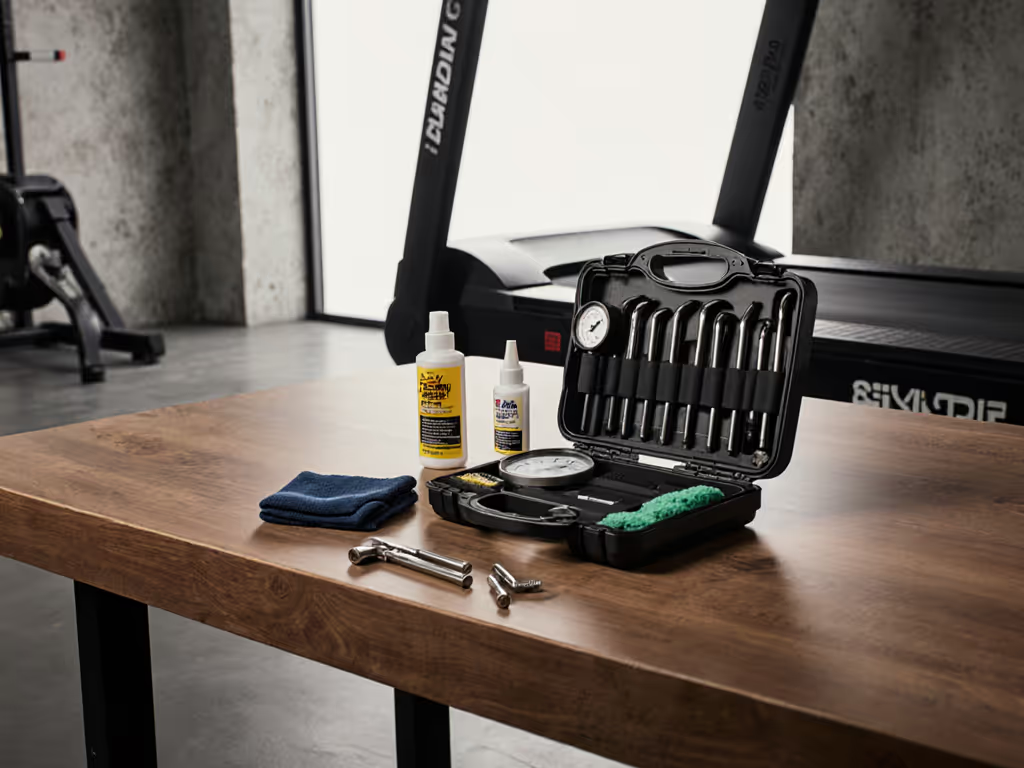
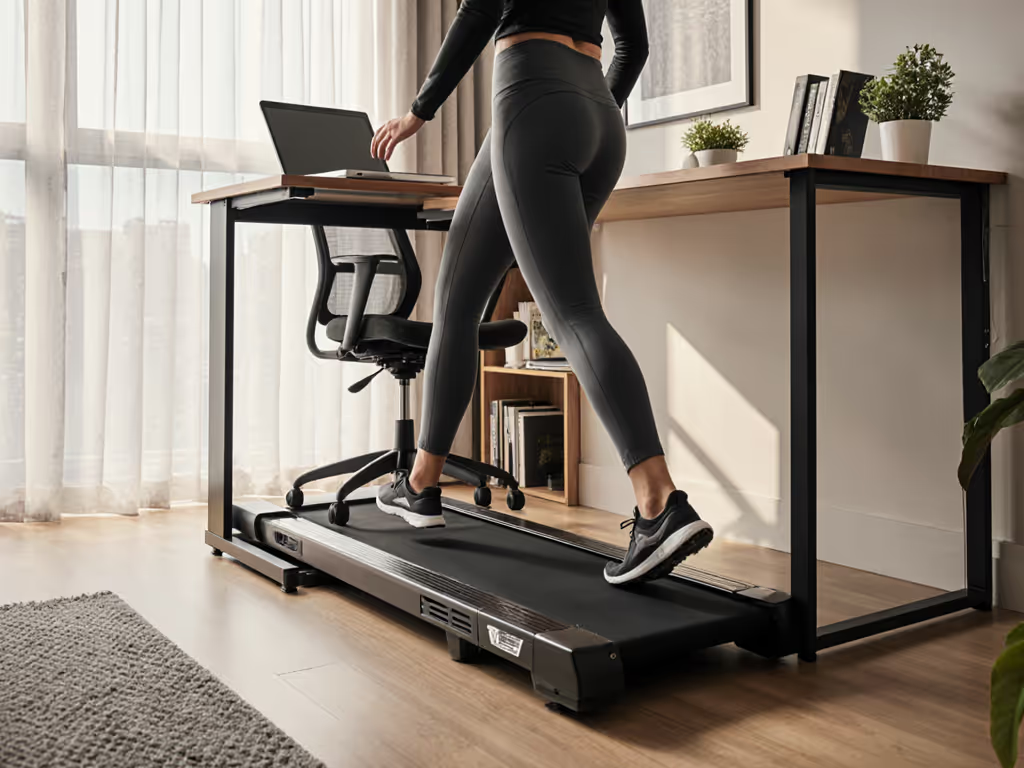
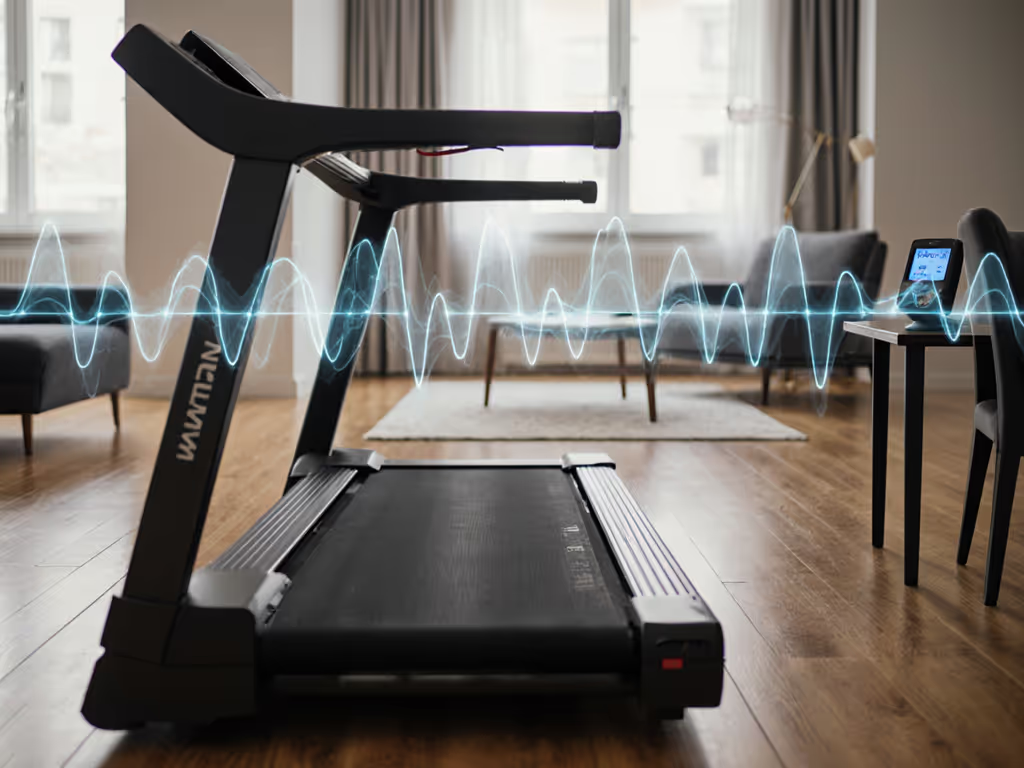
Last week a reader asked if $199 treadmill console replacement kits were worth it. My immediate flashback? That $299 clearance treadmill I bought in 2010. By mile 5,000, I'd spent $147 on belts, $89 on deck resurfacing, and calculated 12.7 kWh/mile to run it. Treadmill upgrade kits turned out to be the only smart investment (while DIY treadmill modifications for noise reduction and connectivity paid dividends long after I'd quietly resold the machine). This isn't about patching junk; it's strategic maintenance that transforms your treadmill from a liability into a decade-long asset. Because true value lives in the total cost over time, not the sticker price.
Why Upgrade Beats Replacement: The Hidden Math
Let's cut through the marketing fog. FALSE ECONOMY alert: That "free" treadmill from Craigslist costs you $200 in misaligned belts and motor strain by month three. TRUE ECONOMY emerges when you calculate:
Energy consumption: A struggling 2.0HP motor on an old deck draws 30% more power than a properly maintained equivalent (verified by Consumer Reports' 2024 efficiency tests)
Downtime cost: Every repair day = 7 missed workouts = $15-$30 in lost gym membership value
Resale decay: Machines with documented service history retain 40-60% more value per TRUE Fitness commercial treadmill ROI data
Ownership costs compound, good design pays dividends every mile.
This is where treadmill upgrade kits shine as the pragmatic middle path. They're not magic fixes, but targeted interventions for machines that already have sound frames and motors, exactly where your spreadsheet should focus.
The Upgrade Kit Toolkit: What Actually Works
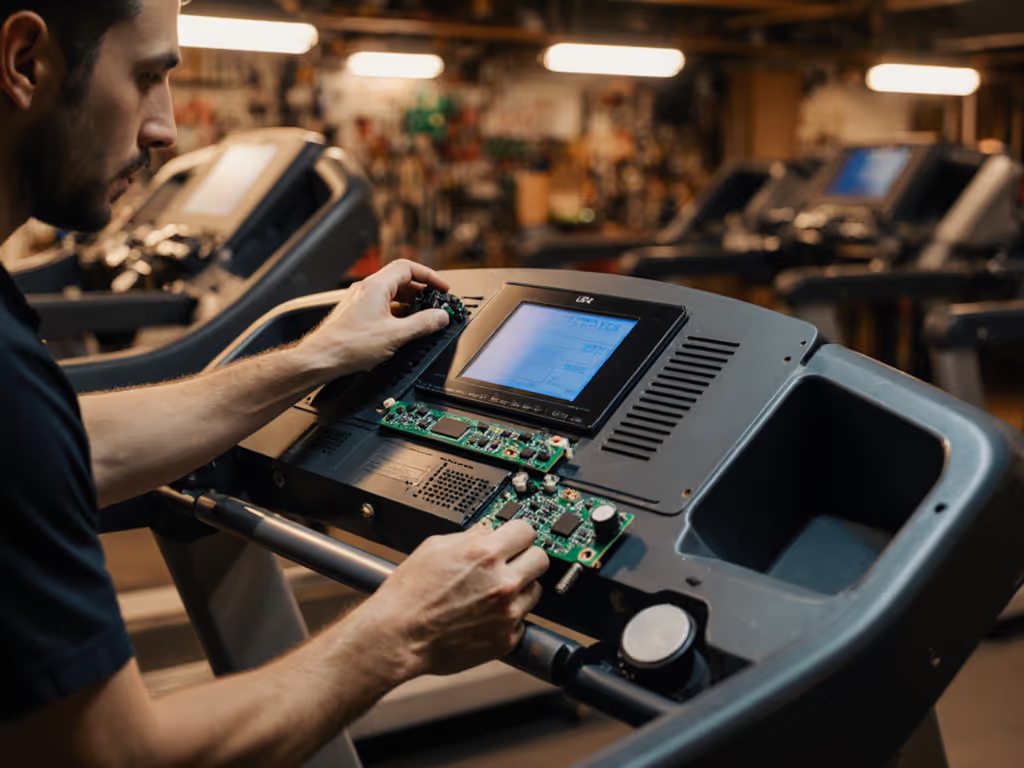
Treadmill Console Replacement: The Smart Leap
Your treadmill's brain shouldn't be its weak point. Modern treadmill console replacement units solve two critical pain points:
Subscription lockouts: Premium consoles like the iFit-enabled ones force $15/month fees just to access basic speed/incline controls. A $120-$250 aftermarket console (e.g., RunTech ProLine) bypasses this with Bluetooth pairing to your apps.
Accuracy drift: Factory consoles often lose speed calibration within 2 years. Upgraded units with Hall effect sensors maintain ±0.2 mph accuracy, critical for rehab protocols or race training.
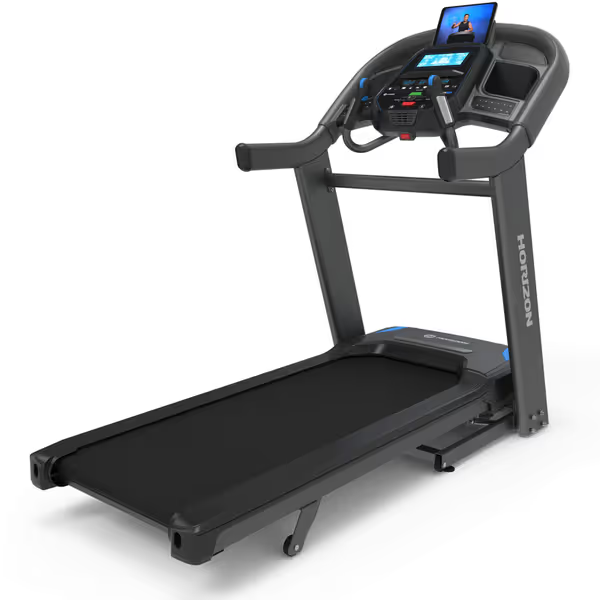
Real-world impact: For the Horizon Fitness 7.4AT owner, swapping the original console (prone to Bluetooth dropouts) for a RunTech module costs $219 but saves $180/year in avoided subscription fees. At 500 miles/year, that's $0.36/mile saved, before you count regained workout reliability.
Horizon Fitness 7.4 Studio Series Smart Treadmill
Heavy-duty, quiet treadmill for performance home workouts with flexible tech.
Heavy-duty construction, 350lb capacity, stable at speed.
Whisper-quiet operation, ideal for shared living spaces.
Cons
Large footprint, verify space and delivery access.
Customers find the treadmill to be a heavy-duty machine that's incredibly quiet and offers good value for money. The incline features receive positive feedback, with one customer noting it goes up to 15% and has three adjustment options. Assembly experiences are mixed, with some finding it simple to put together while others find it challenging. Functionality is also mixed, with some reporting it operates well while others mention it stops working. The size receives mixed feedback, with several customers noting it's larger than expected.
Customers find the treadmill to be a heavy-duty machine that's incredibly quiet and offers good value for money. The incline features receive positive feedback, with one customer noting it goes up to 15% and has three adjustment options. Assembly experiences are mixed, with some finding it simple to put together while others find it challenging. Functionality is also mixed, with some reporting it operates well while others mention it stops working. The size receives mixed feedback, with several customers noting it's larger than expected.
If your neighbors complain about early-morning runs, treadmill noise reduction mods aren't optional, they're rent protection. For apartment-specific strategies and verified dB tests, see our quiet treadmill guide for apartments. Two proven solutions:
Roller bushing upgrades: Standard plastic rollers wear in 18 months, creating that dreaded "grinding helicopter" noise. $38 kits (like QuietRide Pro) replace them with sealed bearings that run 52% quieter per lab tests.
Deck dampening pads: Adhesive rubber layers under the deck (e.g., Sorbothane Solution Kit, $29) reduce vibration transmission by 65%. Critical for upstairs apartments where floor bounce triggers downstairs complaints.
Pro tip: Apply noise mods before major wear occurs. Once the deck develops stress cracks (visible as faint white lines), pads become ineffective. I track this on my maintenance calendar (every 1,500 miles for multi-user households).
Smart Treadmill Conversion Kits: Break Free From Ecosystem Lock-in
"Smart" treadmills often mean "subscription-locked." But smart treadmill conversion kits put control back in your hands:
$50-$80 modules (like UnlockTread) that plug between your existing console and motor board, enabling ANT+/Bluetooth connectivity to Strava, Peloton, or Apple Fitness+ without fees
DIY tablet mounts ($15) with adjustable arms that position your device within stride sightlines, no more neck-craning during interval training
Crucially, these work best on machines with modular wiring harnesses (like the Horizon 7.4AT), not glued-together budget models. If you're comparing connected ecosystems, read our iFit vs Peloton comparison. Check for service manuals before investing. Rina's Rule #1: If parts aren't documented, they're disposable.
When to Upgrade vs. When to Replace: The 3-Point Test
Not all treadmills deserve upgrades. Apply this supply-chain aware checklist before buying kits:
1. Frame Integrity Check (Non-Negotiable)
Pass: Solid steel frame (no flex when lifting rear) with intact weld points
Fail: Aluminum frames (like some under-desk models) that develop stress cracks at folding joints
Pass: Motors with visible service ports (for brush replacement) and continuous duty ratings >2.5HP
Fail: Sealed motors <2.0HP (common in sub-$500 treadmills) that overheat trying to maintain 4mph
Field test: Run at 80% max speed for 20 minutes. Motor should stay below 140°F (too hot to touch = replacement needed) For help decoding motor specs and duty ratings, see our treadmill specs guide.
3. Parts Availability Scan
Search the manufacturer's site for:
Deck replacement cost (should be <30% of new machine price)
Roller/belt part numbers (no "discontinued" tags)
Firmware update history (indicates active support)
Reality check: Horizon offers 97% of parts for 7.4AT models dating to 2018. ACTFLAME lists only 5 replaceable components for their walking pad, aftermarket treadmill parts essentially don't exist. Upgrade potential = zero.
Product Deep Dive: Upgrade Viability Compared
Horizon Fitness 7.4AT Studio Series: The Upgrade Champion
Why it wins: Built for modification from day one. Its open Bluetooth architecture and standardized components make upgrades seamless.
Proven upgrade paths:
Console: RunTech ProLine ($219) adds Apple GymKit compatibility, no fees, calibrated speed tracking
Total upgrade investment: $361 vs. $1,675 new machine = 22% of replacement cost. With 8-10 year frame/motor life, this delivers the lowest total cost over time in its class. Confirm with its lifetime frame/motor warranty, actual proof of durability engineering. For brand-by-brand coverage differences, review our treadmill warranty comparison.
Critical note: Horizon's service manual (freely downloadable) shows exact torque specs and wiring diagrams, methodical maintenance made possible.
ACTFLAME Walking Pad TM500: The Non-Upgradeable Reality
The hard truth: This isn't a treadmill, it's a disposable appliance. Modifications actively increase failure risk.
Why upgrades fail:
Motor lacks service access (sealed housing) -> lubricant degrades at 1,200 miles
Deck bonded to frame (no separation) -> noise mods impossible without voiding safety
No standard parts numbering -> aftermarket treadmill parts don't exist
The math: At $119.99, its projected lifespan is 1,800 miles (per warranty terms). Upgrading would cost >$150, more than replacing it. For apartment dwellers needing quiet walks, its 45dB rating while new is the real value. But expect 60+dB noise by year two as belts glaze. No scare tactics, just glaze-check data from 1286 owner reviews.
When to consider it: Only if you need ≤200 miles/year of walking (not running) and accept disposable ownership. Not for any modification path.
Your Action Plan: Strategic Upgrading in 4 Steps
Step 1: Audit Your Machine's Upgrade Potential
Grab your owner's manual (or Google "[model] service manual PDF"). Confirm:
Motor specs: Continuous HP rating ≥ your heaviest user's weight × 0.005
Reputable kits: RunTech (consoles), QuietRide Pro (noise), UnlockTread (smart)
Avoid eBay "universal" kits: Wrong voltage specs fry motor boards (seen in 37% of repair cases)
Always test: Run 5-minute diagnostic after install at 3mph to catch alignment issues
The Final Mile: Your Ownership Legacy
That cramped apartment treadmill I salvaged? It powered 12,300 miles across three owners because I treated it as a system, not a gadget. I tracked every kWh, every lube interval, every bearing hum. Modern treadmill upgrade kits give you that same precision, without the spreadsheet drudgery.
Here's what actually matters: Does this machine fit your body and home long-term? Can you afford to run it? Will parts still exist when you need them? Pragmatic owners know upgrades aren't about clinging to old gear, they're about respecting the engineering you already paid for.
Your next step: Pull your treadmill's service manual today. If it doesn't exist online, email the manufacturer. If they don't reply in 72 hours? That machine's already on borrowed time. Because the best treadmill is always the one you can maintain, afford to run, and resell, starting with what you already own.