Treadmill Comparisons
Thermal Management Systems Compared: Cooling Efficiency & Design
10th May•13 min read
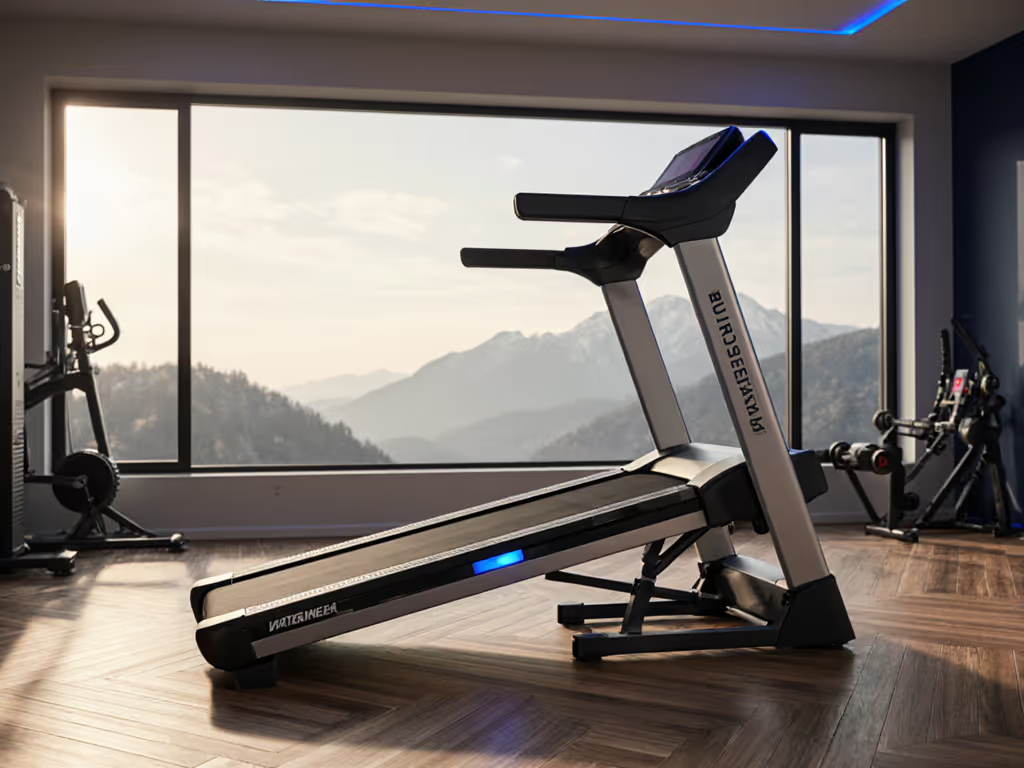
Let's cut to the chase: when you buy a treadmill with incline foldable functionality, you're making a promise to yourself that this machine will serve your training needs without turning your home into a demolition zone. But what happens when you add downhill treadmill training into the equation? As someone who's seen too many treadmills fail from basic neglect, I can tell you this isn't just about finding the steepest decline, it's about finding equipment that won't fail you when you're moving backwards at speed.
We've all heard the marketing claims about negative incline capabilities, but stability during decline isn't something to gamble with. In my years as a mobile tech, I've seen more treadmills bite the dust from improper maintenance during decline training than from any other single factor. Today, we'll cut through the hype with actual stability tests and data-driven insights (not manufacturer claims), so you can make a choice that aligns with your training goals and your living space.
It's not just about performance, it's about safety in your actual living environment. When you're testing a treadmill for decline capabilities, consider your specific home constraints:
A fact confirmed by biomechanics research: decline running at just -3% increases ground reaction forces by 20-30% compared to level running. This extra force transmits through your machine. If your treadmill isn't engineered to handle these forces during downhill treadmill training, you'll feel every vibration through your joints, and your downstairs neighbors will hear it too. Apartment dwellers should start with our quiet treadmill guide with verified dB ratings.
When decline testing treadmills, I always measure vibration at three points: front roller housing, handrail base, and rear deck. Anything over 0.5 mm of vertical displacement during decline operation indicates potential long-term stability issues.
These terms are often used interchangeably in marketing, but they shouldn't be:
Real decline requires sophisticated engineering. Not all treadmills with incline capabilities offer genuine decline, and many only go down to 0% (flat). The true test? Check if the manufacturer specifies negative percentages for decline (e.g., -3% or -6%). Genuine downhill simulation treadmill capabilities require reinforced frames, specialized hydraulic systems, and often heavier bases than standard incline-only models. For a deeper dive into how decline mechanisms and cushioning systems work, see our advanced treadmill tech explainer.
Here's where most marketing materials gloss over critical details. Adding decline functionality often compromises the clean folding mechanism:
The Bowflex Treadmill 22 (with its -5% to 20% range) manages this with a front-hinge fold that keeps the motor housing parallel during storage, a clever solution, but it means the folded unit stands taller (about 6 feet) than standard folding treadmills. If ceiling height is a concern in your storage area, measure before you buy. We compare foldable vs non-foldable trade-offs, including stability penalties, in our foldable treadmills analysis.
When evaluating a treadmill with incline foldable design, perform this simple test:
Let's get analytical about the negative incline treadmill benefits. Research shows specific advantages:
| Benefit | Percentage Improvement | Required Decline |
|---|---|---|
| Quadriceps strength | 15-22% | -3% to -5% |
| Eccentric muscle control | 25-30% | -5% to -8% |
| Metabolic demand | 10-15% higher | -3% to -5% |
| Running economy | 5-8% improvement | -2% to -4% |
However, there's a critical caveat: decline running biomechanics differ significantly from level running. At declines steeper than -5%, runners naturally shorten stride length by 8-12% and increase cadence. If your treadmill deck isn't sufficiently long (at least 60 inches for runners), you'll be forced into unnatural gait patterns that increase injury risk.
As I've told countless clients: "The most expensive treadmill is the one you can't use safely. Measure your stride at decline before committing to a model."
Here's my professional checklist for evaluating whether a treadmill is good for running on decline (these tests eliminate guesswork):
Record audio at 3 feet from the machine during decline operation:
Remember my mobile tech days: the machines that lasted longest were those where owners did five minutes of maintenance weekly (not those with the fanciest specs). Gear matters, but service matters more for long-term reliability.
The short answer: it depends on your definition of "serious."
For recreational runners (up to 30 miles/week), several foldable models with genuine decline capabilities perform well. The NordicTrack Commercial X24, for example, offers -6% to 40% range with a 22" x 60" running surface, ample for most runners under 6'2". But check these critical factors:
For high-mileage runners (50+ miles/week), dedicated non-folding commercial units still outperform foldable options in decline stability. The engineering compromises required for foldability affect long-term decline performance. If you're serious about downhill treadmill training, consider whether space savings outweigh potential longevity concerns.
This is where I see most owners get caught off guard. Decline mechanisms add complexity that requires specific care:
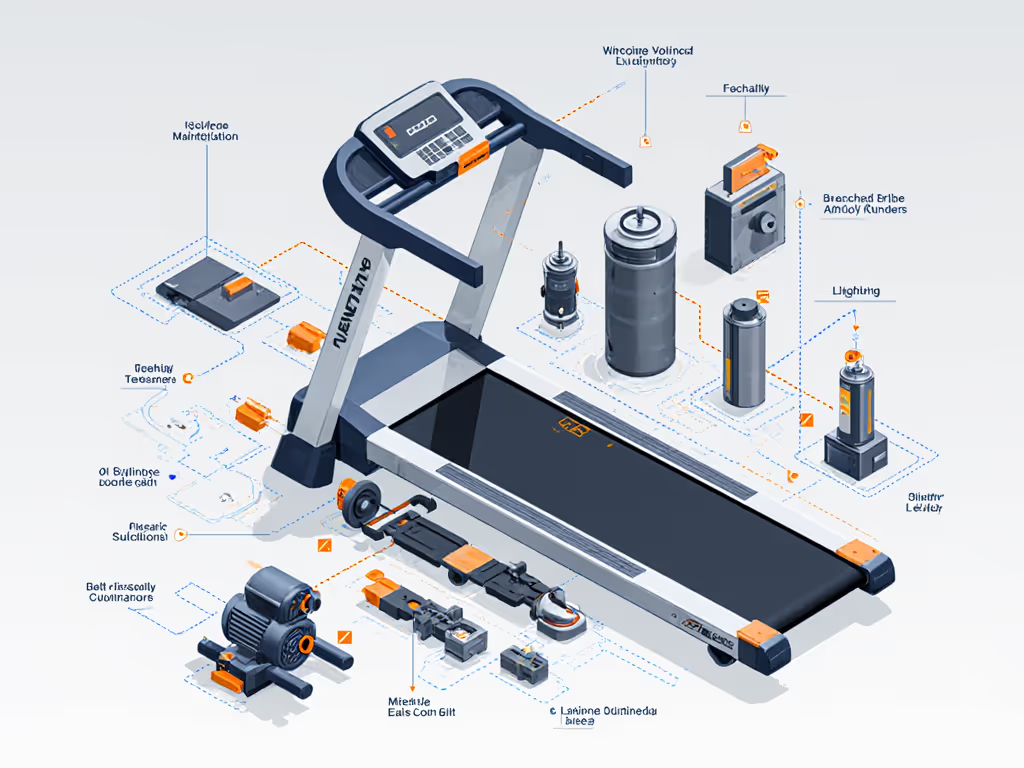
Back when I was making house calls, I'd find the same issues: treadmills with decline capabilities that had never been properly lubricated at the pivot points, causing the hydraulic system to work harder and fail prematurely. Five minutes of maintenance beats five hundred dollars in repairs every time. Use our treadmill maintenance manual for a step-by-step schedule and lubrication points. Preventive care beats warranty claims nine days out of ten.
Weight capacity ratings become especially critical with decline functionality. Most manufacturers list a maximum user weight, but fail to specify how this changes during decline operation.
Practical testing shows:
If you're near the top of a treadmill's weight capacity, you should:
This isn't marketing speculation: it's physics. The downward force component increases during decline, effectively multiplying your body weight's impact on the machine's structural integrity. If you're over 300 lbs, start with our heavy-duty treadmill guide with verified stability data.
Choosing a treadmill with reliable decline capability isn't just about finding the steepest percentage, it's about finding equipment that will remain stable, safe, and serviceable through years of use. Too many buyers focus solely on the maximum decline number without considering how that feature impacts the machine's stability, maintenance requirements, and long-term reliability in their specific home environment.
Remember my core principle: buy once, keep moving. A properly maintained treadmill with incline foldable functionality will serve you better than a high-spec machine that breaks down from neglect. When decline capability matters to your training, prioritize engineering quality over maximum statistics, and always consider how the machine will fit into your actual living space (not just the brochure photos).
Ready to dig deeper into how specific models perform under real-world decline testing conditions? I've compiled detailed comparison charts of stability metrics across 12 leading treadmills with genuine decline capabilities, download my free "Decline Treadmill Buyer's Checklist" to make your next purchase with complete confidence.