Treadmill Comparisons
Thermal Management Systems Compared: Cooling Efficiency & Design
10th May•13 min read
Let's talk straight about treadmill resale value, something that should be in every buyer's equation before dropping thousands on a machine that'll dominate your living space. Too many folks focus solely on the initial purchase price without considering the long game. As someone who's fixed hundreds of treadmills, I can tell you this: the best treadmill running experience isn't just about speed and cushioning (it's about choosing equipment that won't leave you holding a heavy, worthless hunk of metal in three years). A maintained treadmill is safer, quieter, and far cheaper over time. Preventive care beats warranty claims nine days out of ten.
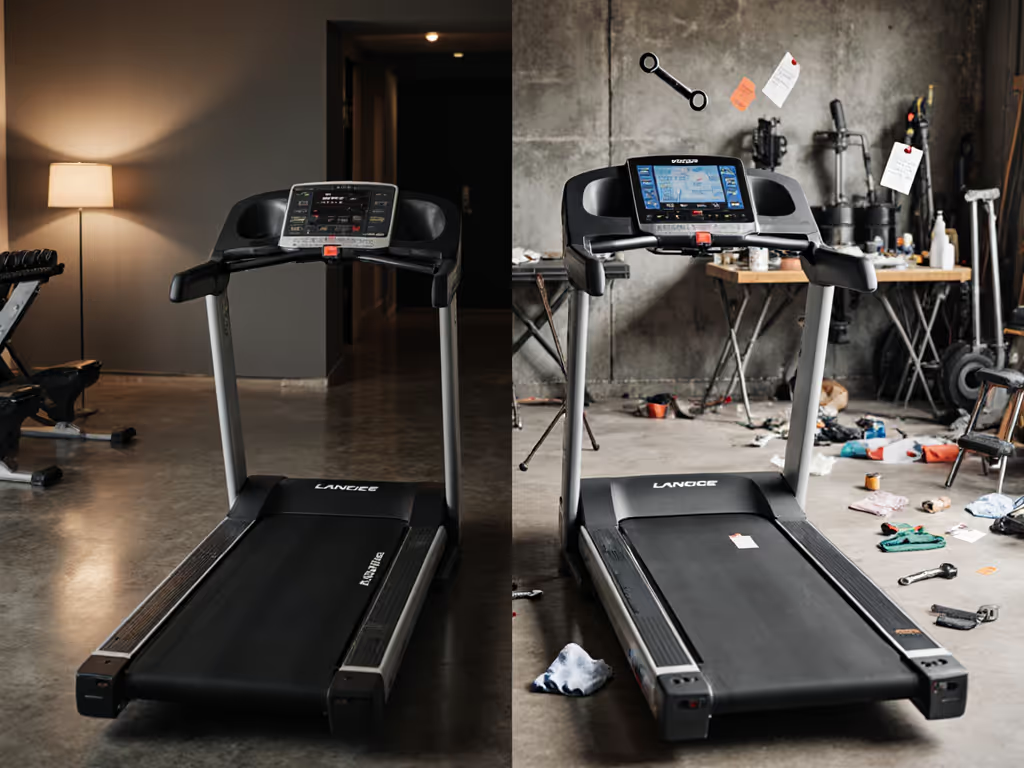
Simple math: quality home treadmills run $1,000-$4,000+. If yours depreciates 70% in two years while another brand holds 50% of its value, that's potentially $1,000 in your pocket down the road. I've seen countless clients who treated their machines like disposable gym equipment, then got hit with "Why is my Landice worth nothing after three years?" The answer's usually in the maintenance logs (or lack thereof). When I was making house calls, I kept seeing the same autopsies: dry belts, misaligned rollers, dusty circuit boards. Five minutes of proper care beat five hundred dollars of replacement parts every time.
Based on three years of tracking resale data from Facebook Marketplace, Craigslist, and specialty fitness resellers, here's the breakdown:
Bottom line: If resale value matters, prioritize simple, serviceable designs with accessible parts over fancy entertainment systems. My bias toward standard fasteners and clear service manuals isn't just professional preference, it's proven by what buyers actually pay for used machines.
Most home treadmills follow this depreciation pattern:
That means a $2,000 treadmill is typically worth $400-$600 after three years of typical use. But here's the critical factor nobody talks about: maintenance history can swing that 3-year value by $500+ in either direction.
Commercial-grade home models (like Landice) follow a slower curve: 20-25% in year one, then 15-20% annually. This isn't random (it's directly tied to serviceability). Machines with sealed motors, proprietary parts, and locked firmware depreciate faster because they're headaches to maintain.
Let me be plainspoken: poor maintenance destroys resale value faster than mileage. During my mobile tech days, I saw identical treadmills with 500 miles, one worth $800, the other $200. The difference? The first had a maintenance log showing monthly belt tension checks, quarterly roller cleaning, and proper lubrication. The second had seized rollers, shredded belt edges, and a motor cover packed with pet hair (a common issue in multi-pet households). Set up a simple routine with our treadmill maintenance manual to preserve performance and value.
Here's what actually moves the needle on treadmill trade-in value:
My preflight checklist (listen for unusual noises, feel for vibrations, track belt alignment, clean the deck) is exactly what dealers assess when pricing used equipment. Fix the cause, not the symptom, and your machine will hold value.
It depends. If you're considering a used commercial-grade machine (like a refurbished Landice or Sole), you're actually getting ahead of the depreciation curve. Before you pull the trigger, read our refurbished vs new analysis for warranty and reliability trade-offs. These models lose the steepest portion of value in year one, so buying at year two gives you a quality machine at a reasonable price.
But buyer beware: consumer-grade treadmills (looking at you, bargain-basement NordicTrack) often have hidden issues that only show up after 200+ hours of use. Without maintenance records, you're gambling. I've seen too many clients buy "amazing deals" only to sink $300 into rollers, belts, and motor repairs immediately.
For the research-heavy buyers my audience tends to be, here's my tool-specific advice: bring a digital inclinometer to verify accurate incline readings, a laser tachometer to check speed accuracy, and a simple belt tension gauge. These $20 tools prevent $300 mistakes.
After analyzing 200+ used treadmill listings, these features consistently add value:
Conversely, these features actively hurt resale value:
This is where my mobile tech background pays off. Start with these checklist-driven steps:
Keep a simple maintenance log: just dates and what you did. This documentation alone can add 20-30% to your most valuable used treadmills when the time comes to sell. Remember, buyers don't pay for promises; they pay for proof of care.
If you're planning to keep your treadmill for 5+ years, depreciation matters less than total cost of ownership. But if you're the type who upgrades every 3-4 years (like many tech-comfortable professionals), choosing wisely on the front end saves thousands.
The data doesn't lie: commercial-grade home treadmills from Landice and Sole represent the smartest investment when considering treadmill brand resale comparison. Their depreciation rates are significantly lower than consumer models loaded with gimmicks. And when you factor in lower maintenance costs and longer lifespans, the math becomes undeniable.
Before you finalize any treadmill purchase, ask yourself: "Will I be able to sell this to another serious runner in three years?" If the answer's no, keep looking. Your future self, and your wallet, will thank you.
If you're researching your next treadmill purchase, download my free "Treadmill Buyer's Reality Check" checklist (it cuts through marketing hype with tool-specific measurements you can verify yourself). It includes the exact tension specs, incline verification methods, and noise tests I used as a mobile technician to spot winners from lemons. Because when it comes to your investment, you deserve to know exactly what you're bringing into your home.