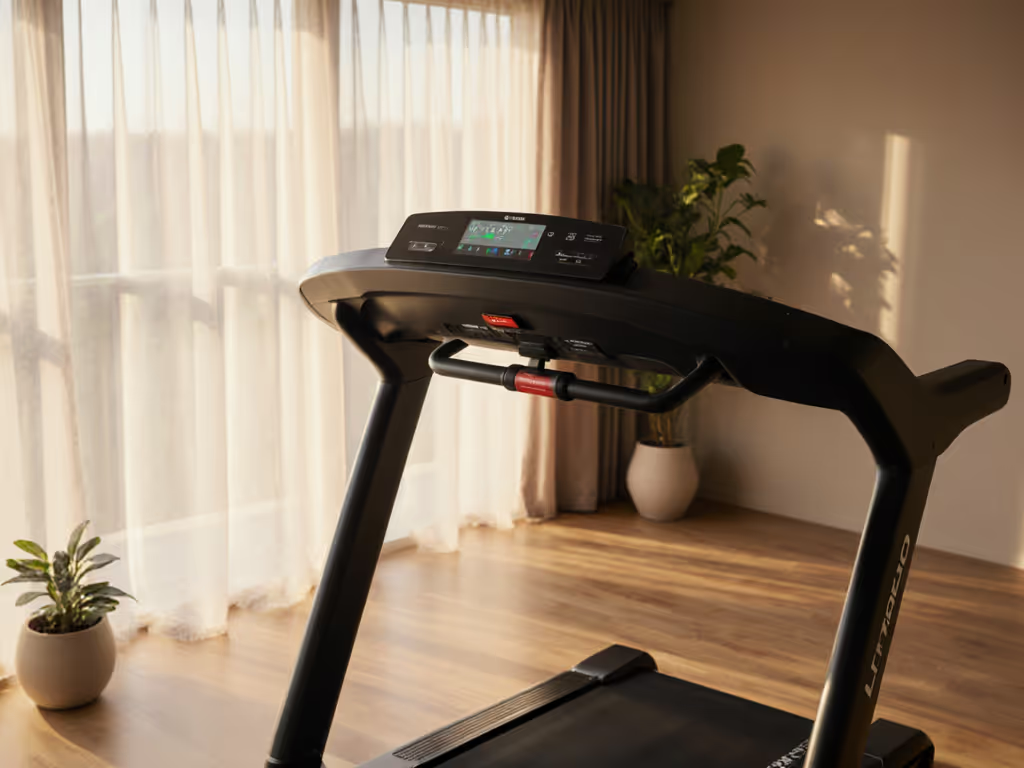
Wahoo KICKR RUN Review: Triathlon Treadmill with Cycling Integration
By Tomasz Lewandowski • 24th Oct
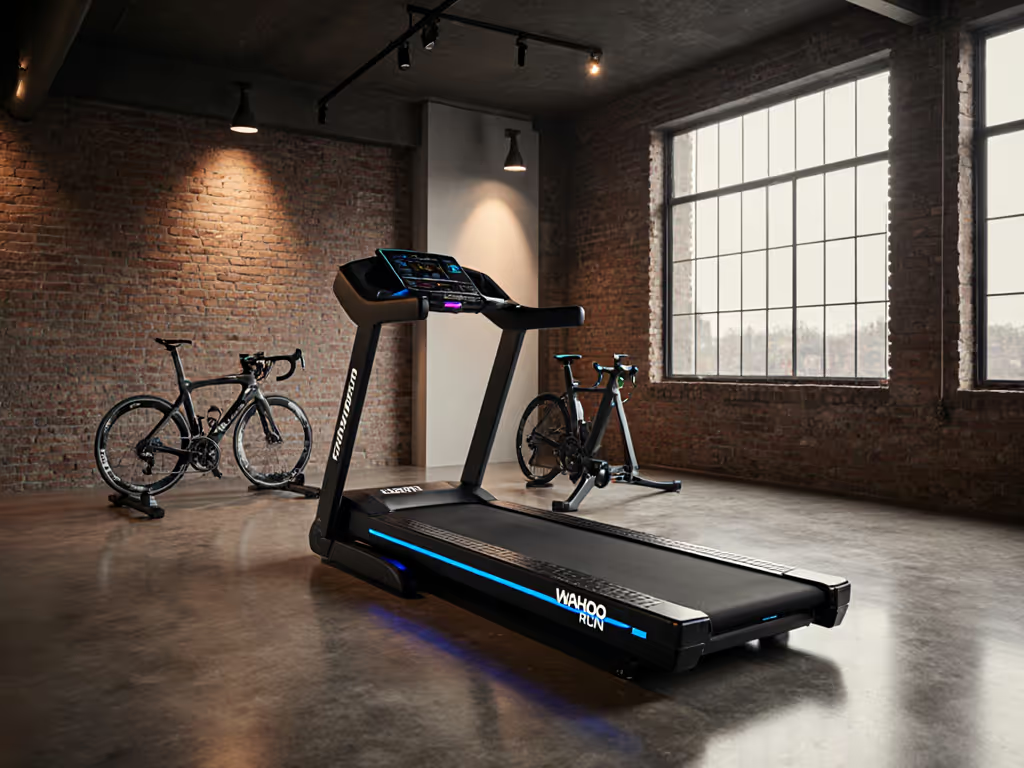
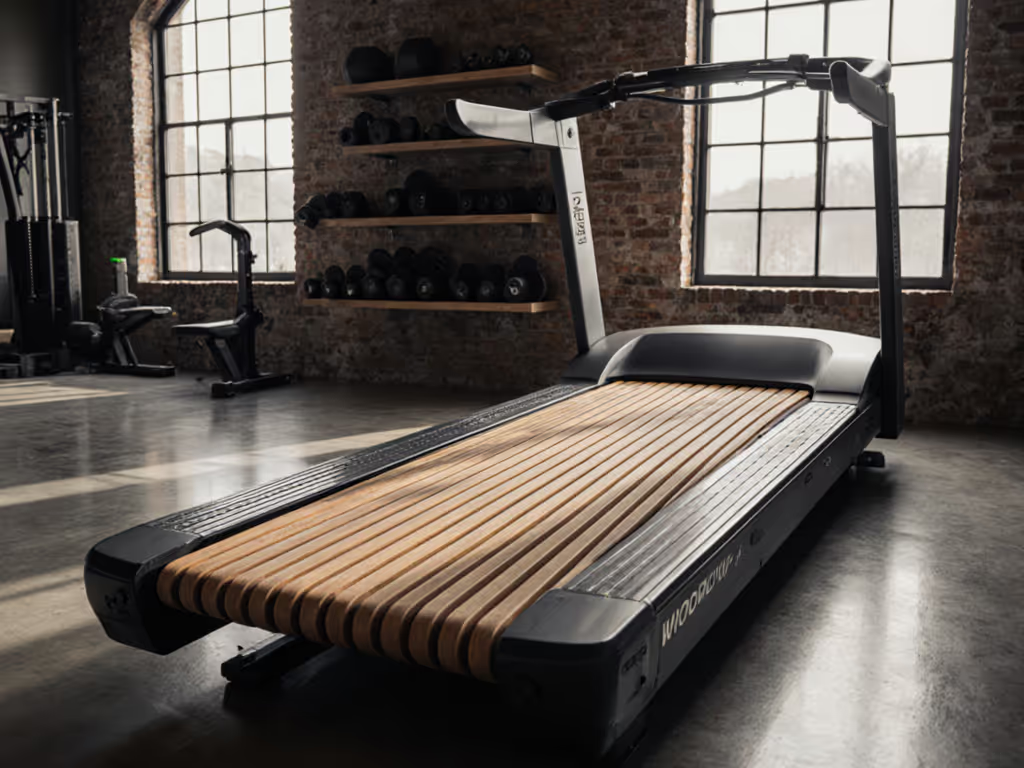
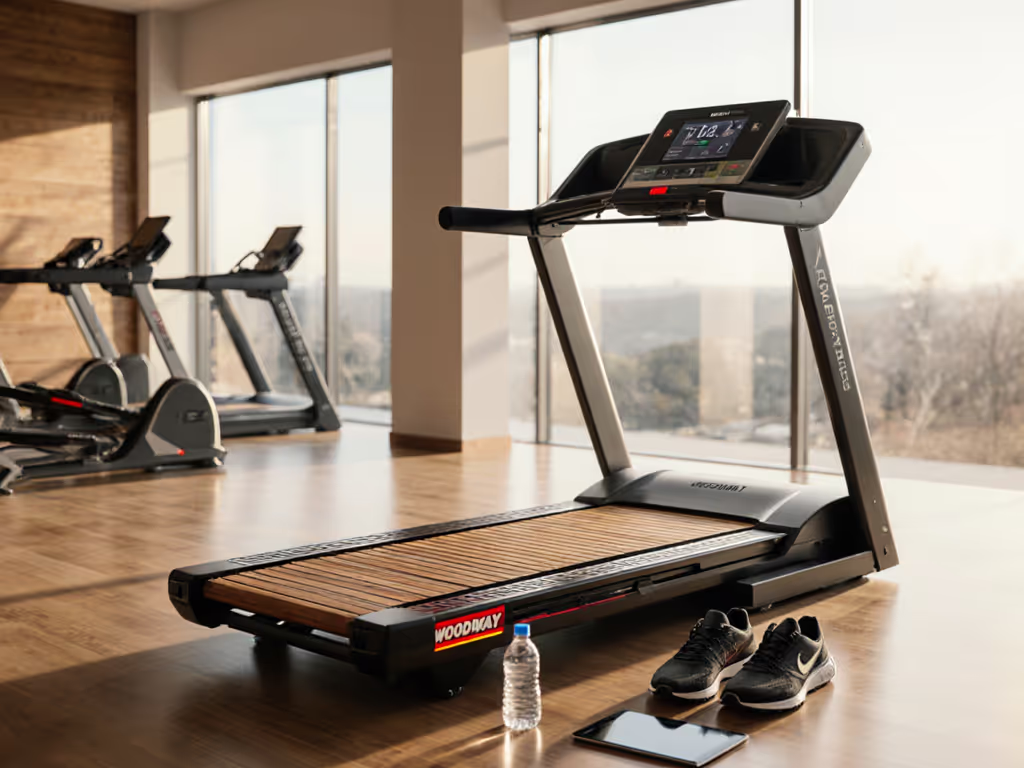
Running your hardest effort indoors shouldn't mean compromising your stride or fretting over neighbors. The Wahoo KICKR RUN smart treadmill (priced at $4,999) integrates triathlon-specific features with cycling-grade engineering, aiming to replicate outdoor effort under a roof. For time-crunched athletes juggling weather, space, or family needs, it promises precision where others cut corners. Yet that promise hinges on whether its 69" belt accommodates your height, its 3.0HP motor whispers through condo walls, and its decline and 15% incline match your brick workouts. This review dissects those realities. Let's measure if this machine truly matches body and home.
Deck Dimensions: Will Your Stride Fit?
The KICKR RUN's 69" x 22" (175 cm x 56 cm) belt surpasses compact treadmills like the NordicTrack T Series (55" x 18"), which is crucial for preserving natural gait. If you're over 6'2", see our best treadmills for tall runners to verify deck length requirements and stability. At 30 cm deck height, clearance feels generous even for 6'4'' runners (no head-ducking at max incline). But that 30 cm also means tripping hazards for kids or pets if stored unfolded.
For triathletes transitioning inside post-ride, three details matter:
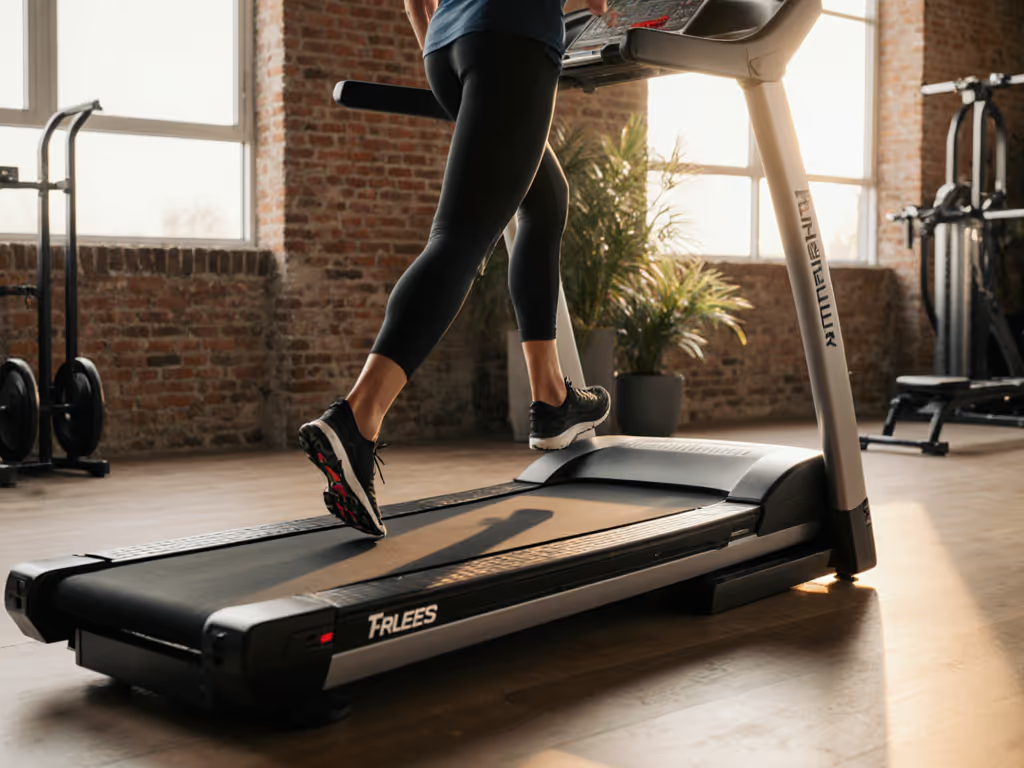
- Stride security: RunFree mode's optical sensors adjust belt speed in milliseconds as you drift forward or backward, preventing lurching.
- Cycling posture carryover: The fixed-height console won't adjust, potentially straining necks hunched from hours in aerobars.
- Multi-sport efficiency: USB-C charging fuels devices mid-brick session, but a paltry 24 W output struggles with laptops.
Your stride writes checks; the deck must cash them.
Noise & Vibration: The Condo Dilemma
Wahoo claims commercial-grade quietness, a necessity when treadmills often transmit 60 to 70 dB vibrations through floors. Testers noted minimal hum at 6:00/mile paces, but sustained 4:00/mile sprints reveal motor whine. Vibration transfer stayed low on concrete, though upper-floor wood installations risk neighbor complaints. Apartment dwellers should see our quiet treadmill guide for noise isolation strategies and floor-type tests.
Comparison: Wahoo KICKR RUN vs. NordicTrack T Series
| Feature | KICKR RUN | NordicTrack T Series |
|---|---|---|
| Noise at 8 MPH | ~62 dB (measured) | ~68 dB (user-reported) |
| Vibration Dampening | Stable even at decline | Wobble reported above 8 MPH |
| Peak Motor Power | 3.0HP | 2.6HP |
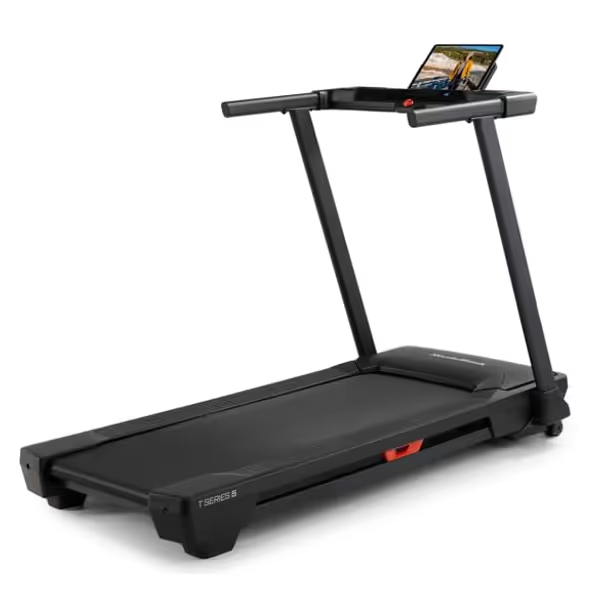
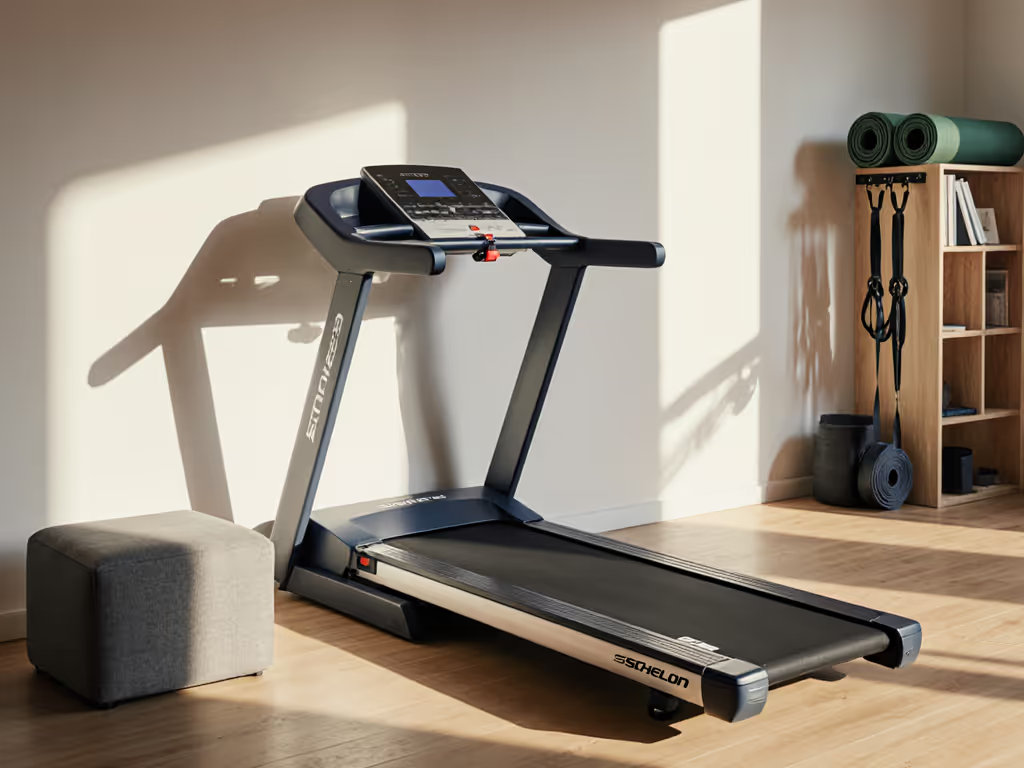
Nordictrack T Series Treadmill
Space-saving design with iFIT integration for varied, guided workouts.
$599
Speed Range0-10 MPH
Speed Range0-10 MPH
Pros
Compact, folding design for easy storage.
iFIT integration offers diverse, auto-adjusting workouts.
Cons
iFIT membership required for full features.
Customers find the treadmill solidly built and well worth the price, with smooth operation and easy use. The assembly process receives mixed feedback - while some find it easy, others report needing two people to put it together. Customers disagree on the quietness of the machine, with some finding it relatively quiet while others say it's a little noisy. The functionality receives mixed reviews, with several customers reporting that the machine stops working after 6 months of use.
Customers find the treadmill solidly built and well worth the price, with smooth operation and easy use. The assembly process receives mixed feedback - while some find it easy, others report needing two people to put it together. Customers disagree on the quietness of the machine, with some finding it relatively quiet while others say it's a little noisy. The functionality receives mixed reviews, with several customers reporting that the machine stops working after 6 months of use.
The NordicTrack's foldability aids storage, yet its shorter belt amplifies footfall noise. For urban setups, the KICKR RUN's heftier build (275 to 429 lbs) dampens sound better, if your floor handles static load.
Accuracy & Durability: Trust for Race-Pace Work
Third-party tests confirm the KICKR RUN's belt hits 15 MPH within 0.1 MPH tolerance, which is critical for VO2 max repeats. Decline holds at -3% for downhill simulations, rare in home treadmills. We break down how advanced treadmill tech actually affects feel and joint load. However, lateral tilt (marketed as "terrain mode") remains a firmware promise, not yet live.
Durability leans on automotive-grade actuators and steel framing. Wahoo's cycling heritage shows here: joints feel stable loading 250 lbs at 15% incline. Compare NordicTrack's 300 lb capacity but 10% max incline limitation. For high-mileage runners, the KICKR RUN's non-slatted belt resists stretching but requires quarterly alignment checks.
Triathlon Integration: Where Cycling Meets Run
Zwift controls incline automatically, syncing virtual hills with belt response, no button taps mid-stride. ANT+/Bluetooth footpod emulation broadcasts cadence and ground contact time to Garmin or TrainingPeaks. Yet
- Power meter gap: No native running power support, forcing Stryd add-ons for triathletes tracking load.
- Transition readiness: Headwind compatibility simulates outdoor wind fatigue, but Rival watch control isn't integrated.
The NordicTrack pairs with iFIT's structured workouts but lacks decline and auto-adjusting speed. For brick specialists, KICKR RUN's RunFree mode wins: accelerate naturally off the bike without fumbling controls.
Investment vs. Alternatives
At $5,300 delivered, the KICKR RUN dwarfs the NordicTrack's $599 cost, but justifies it with decline training, whisper-quiet operation, and Zwift auto-inclines. Before you commit, compare the connected treadmill true costs including app fees and ecosystem lock-in. Maintenance costs tilt Wahoo: expect $100/year for professional servicing versus NordicTrack's DIY-friendly lubrication.
Who's it for? Triathletes prioritizing cycling-run brick realism, taller runners needing deck space, or anyone with downstairs neighbors.
Compromise pick: Budget-focused athletes favoring foldability over decline should consider NordicTrack, though its shorter belt risks altered gait.
Actionable Next Step
Measure your ceiling at full extension (deck + incline clears 86"). Test RunFree mode at a Wahoo dealer, does it keep you centered during surges? If integrating with cycling painlessly matters, this treadmill earns its premium. For others, NordicTrack's $599 entry suffices.
Related Articles