Woodway 4Front Review: Joint-Friendly Treadmill Data
By Tomasz Lewandowski • 12th Apr
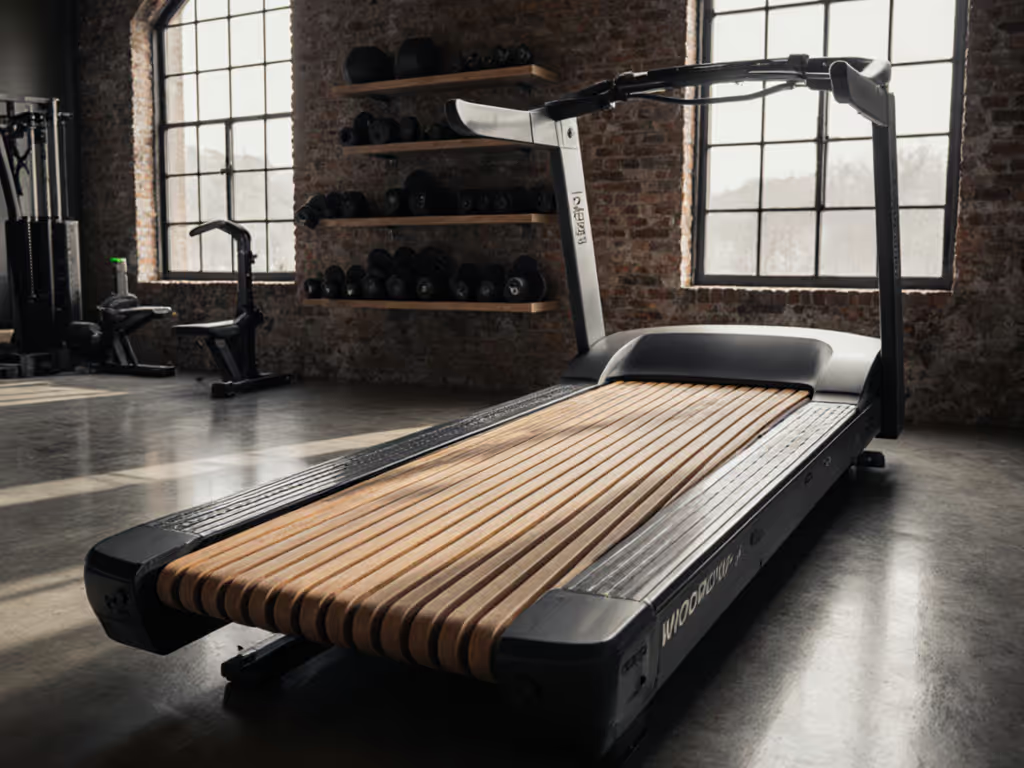
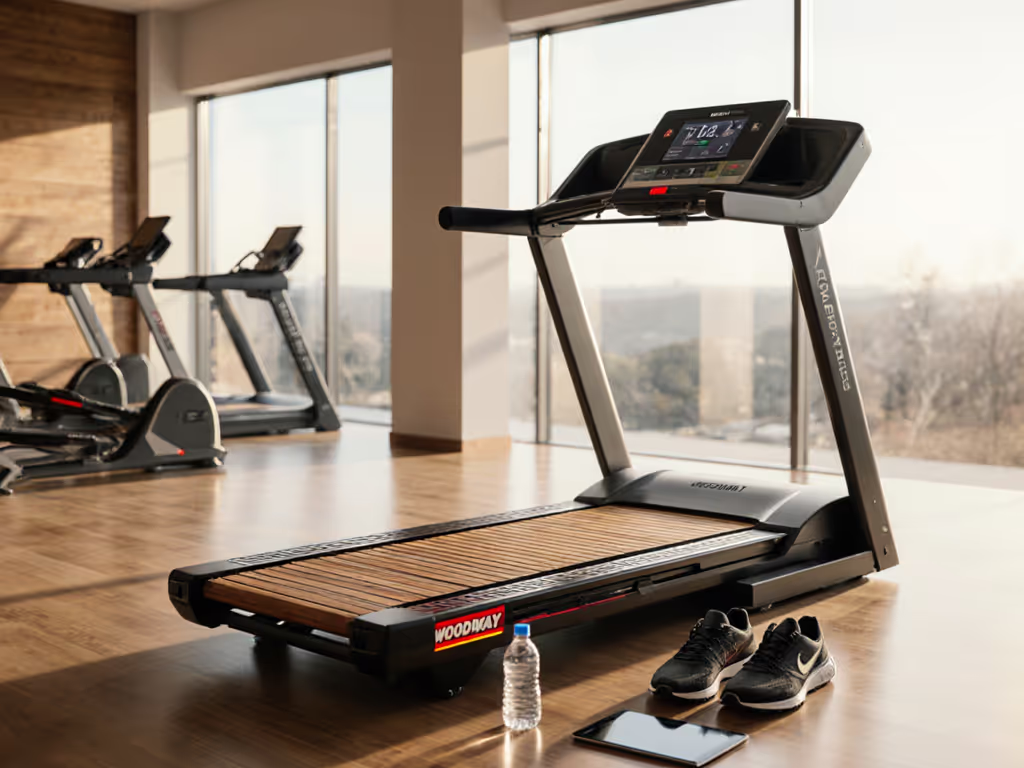
The Woodway 4Front stands apart from conventional home treadmills because it replaces a standard conveyor belt with a patented Slat Belt running surface (individual shock-absorbing rubber slats that mimic outdoor running while protecting your joints). If you're weighing whether this commercial-grade machine justifies its premium price for home use, the answer hinges on three metrics: your stride length, your joint sensitivity, and your commitment to durability over flash. For a deeper look at tradeoffs, see our home vs commercial treadmill comparison.
I learned the hard way that deck length and cushioning aren't luxuries, they're determinants of whether you'll actually use the machine. A back-rail scrape during tempo work taught me to measure effective running area and verify that handrails clear your natural stride at full sprint. The first time I fitted a compact machine to a tall friend's gait safely, I realized the marketing specs were secondary to anthropometric fit. Your stride writes checks; the deck must cash them.
Let's translate the Woodway 4Front's engineering into plain terms and measure whether it answers your specific needs.
What Makes the Slat Belt Technology Different
Conventional treadmills use thin polyvinyl chloride (PVC), nylon, and cotton belts that wear predictably and require regular waxing and alignment adjustments. The Woodway 4Front's vulcanized rubber slats are mechanically interlocked (resembling caterpillar tracks on heavy machinery) and are rated to last up to 150,000 miles, roughly ten times longer than a standard belt. Compare slat vs traditional belts to understand real upkeep costs.
This durability stems from material science, not marketing. Vulcanized rubber is chemically cross-linked, making it resistant to friction and oxidation. The slat design distributes impact across multiple contact points rather than concentrating stress on a single continuous surface. For a 45-year-old returning to consistent running after a decade away, this matters: the machine's durability matches your timeline for establishing a sustainable habit.
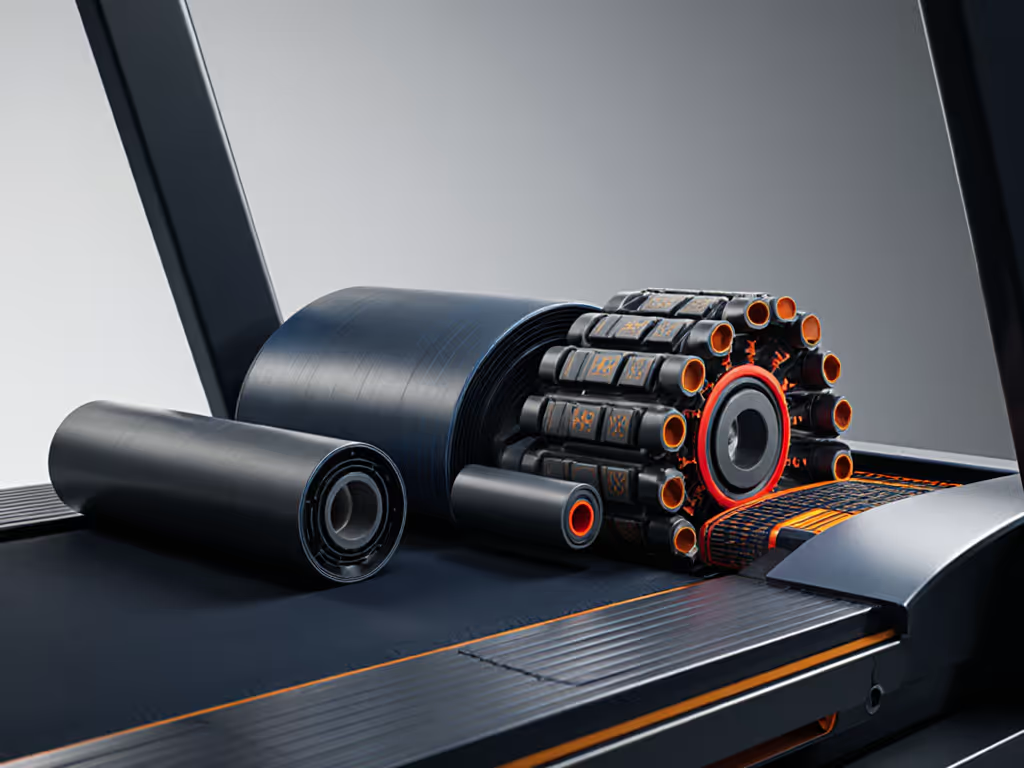
The second advantage is shock absorption. The slats flex independently, dampening ground-reaction force before it travels through your knees, hips, and lower back. This is why the 4Front appears in physical therapy centers alongside gyms. If you have sensitive knees, our treadmill cushioning guide for knee pain explains impact-reducing setups and settings. If your joints signal caution (prior injury, extra body weight, or age-related cartilage changes), the slat mechanism creates measurably softer impact than a belt over a rigid deck.
Deck Length, Stride, and Ceiling Clearance: The Fit Question
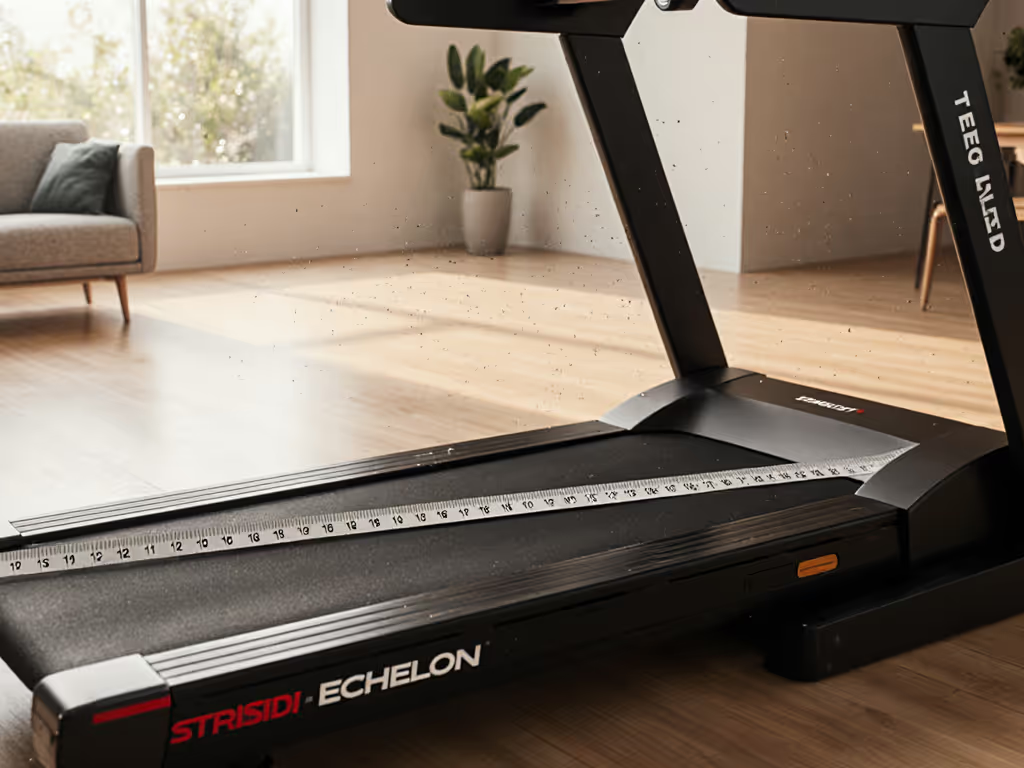
The exact running deck length of the Woodway 4Front is not specified here. This is a critical measurement that I'll address directly: before purchasing any treadmill, verify the effective running surface in writing. A short deck forces a shortened stride (toe-strike pattern), which invites calf and shin strain. A long deck gives your natural running gait room to extend, accelerate, and recover without you consciously shortening your mechanics. If you're over 6'2", our best treadmills for tall runners guide lists verified deck lengths and stride fit.
For the 4Front, contact Woodway directly or a certified dealer to confirm deck dimensions. Measure from the front edge of the belt to the rear handrail, then subtract 6-8 inches as a safety buffer. If you're 5'10" to 6'2", you'll want at least 55-58 inches of clear deck; taller runners need 60+.
Ceiling height is equally hidden in the specs. The 4Front's incline range and the height of the handrails when set to maximum grade determine whether a 7-foot ceiling feels cramped. In apartments or basements, this oversight is costly: you discover too late that your fastest sprint pace bottlenecks because your head brushes the ceiling at 8% grade.
Cushioning Profile: Gentle Support Without Mushy Feel
Joint-friendly doesn't mean bouncy. A mushy deck alters your running form, you land flatter, lose ground-contact awareness, and compensate with hip flexors and Achilles tendon tension. The Woodway slat system avoids this trap because each slat returns to its original position independently, providing consistent firmness cycle after cycle.
Users report that the 4Front feels closer to outdoor asphalt or track than to the soft, bouncy feel found on many traditional treadmills.
Related Articles