When designing a treadmill Parkinson's protocol, safety isn't an accessory (it's the foundation). As someone who measured effective running areas after a back-rail scrape ended my tempo run (long legs, short deck), I've learned that Parkinson's treadmill therapy must prioritize anthropometrics over aesthetics. Comfort and safety determine whether a protocol builds consistency or compounds injury risk. This step-by-step guide translates clinical research into practical setup principles that honor the unique gait patterns of Parkinson's.
Pre-Session Safety Setup: Creating a Body-Aware Environment
Measure Your Actual Running Envelope
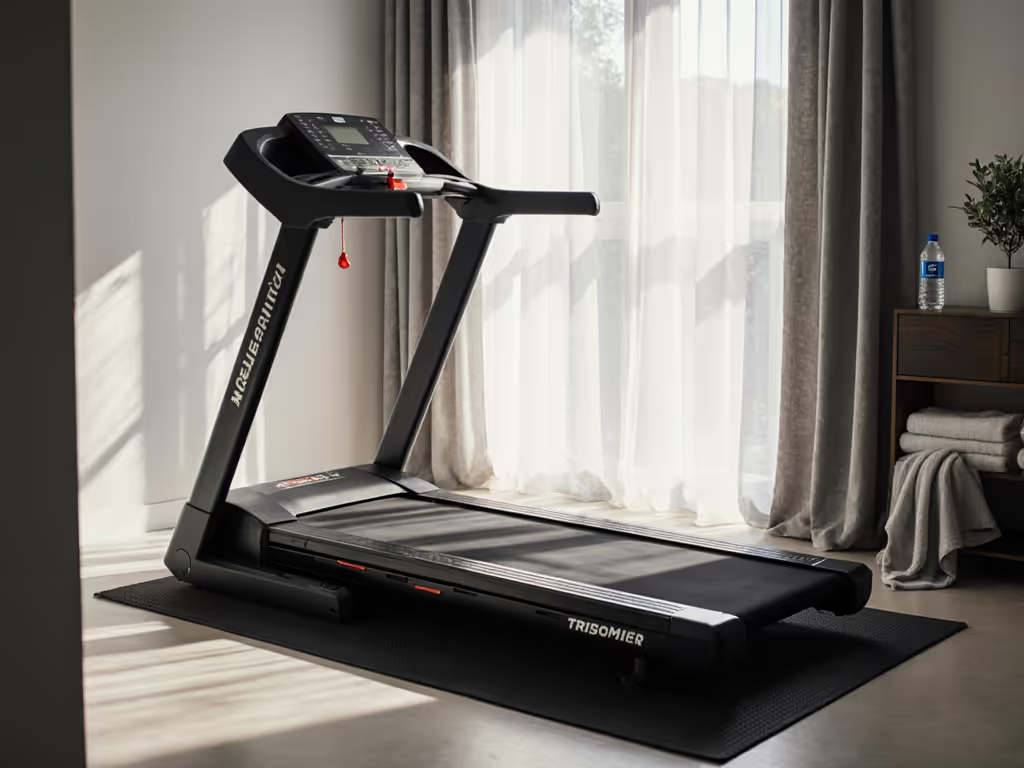
Before pressing start, calculate your effective running zone, not just stride length. Stand naturally on the deck and take three natural steps forward. Mark where your heel lands on step three. Add 12 inches for safety margin. This is your minimum required deck length. Most Parkinson's users need 60+ inches to avoid truncated strides that trigger freezing. Shorter decks force compensatory movements that increase fall risk. For safer buying options with long decks and accessible controls, see our senior-safe walking treadmills guide.
Your stride writes checks; the deck must cash them. A 55-inch deck won't cover a 58-inch stride, regardless of the motor's horsepower.
Verify Critical Clearances
Parkinson's gait often involves forward lean and wider arm swings. Check these non-negotiables:
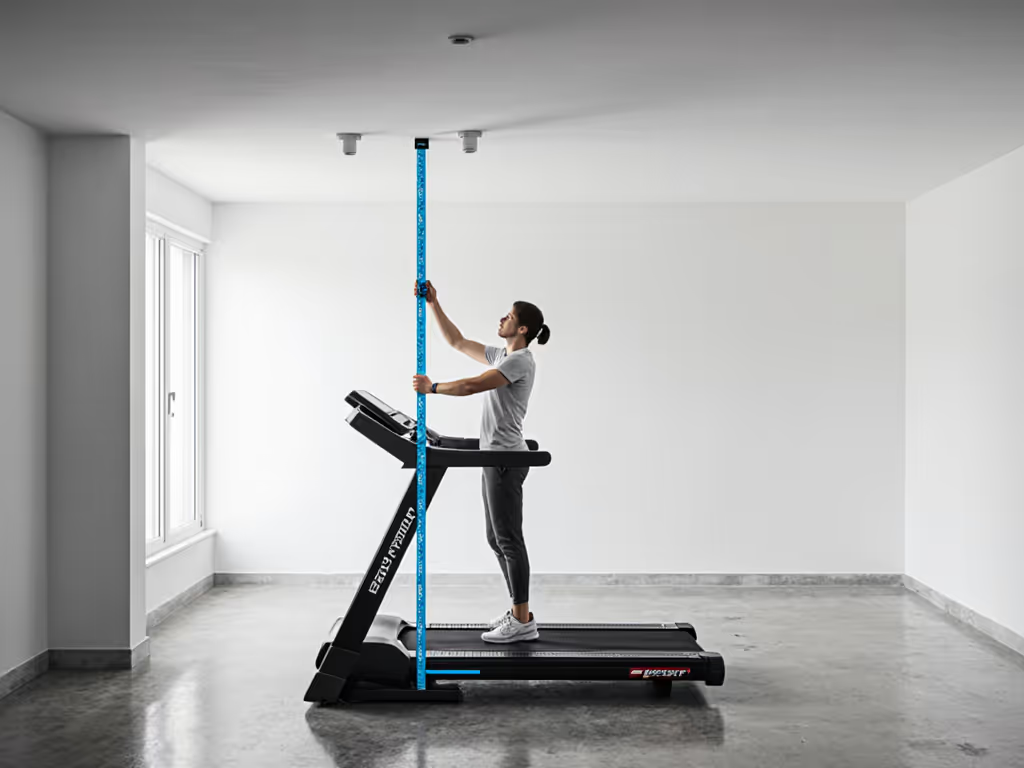
Ceiling height: Measure from floor to lowest overhead obstruction. Subtract 10 inches (for head movement during gait). If <80 inches, lower handrails or choose shorter posts.
Doorway access: Measure through all turns to your treadmill's location. Many "foldable" models still exceed 80" when folded, trapping users in workout rooms.
Emergency stop reach: Position the safety key within 18 inches of starting position. Test this with eyes closed to simulate freezing episodes.
Noise & Vibration Mitigation
Research in npj Parkinson's Disease confirms consistent training reduces freezing episodes, but only if sessions are sustainable. In apartment living, noise deters adherence. If noise is a concern, our quiet treadmill for apartment guide includes verified dB ratings and floor vibration fixes. Place treadmills on rubber mats (minimum 3/4" thick) under all four corners. Test at 2.5 MPH, the most common therapeutic speed for gait training. If neighbors hear thudding, the deck cushioning is too firm or the subfloor inadequate.
Warm-Up Protocol: Priming the Neural Pathways
Dual-Task Preparation (3-5 Minutes)
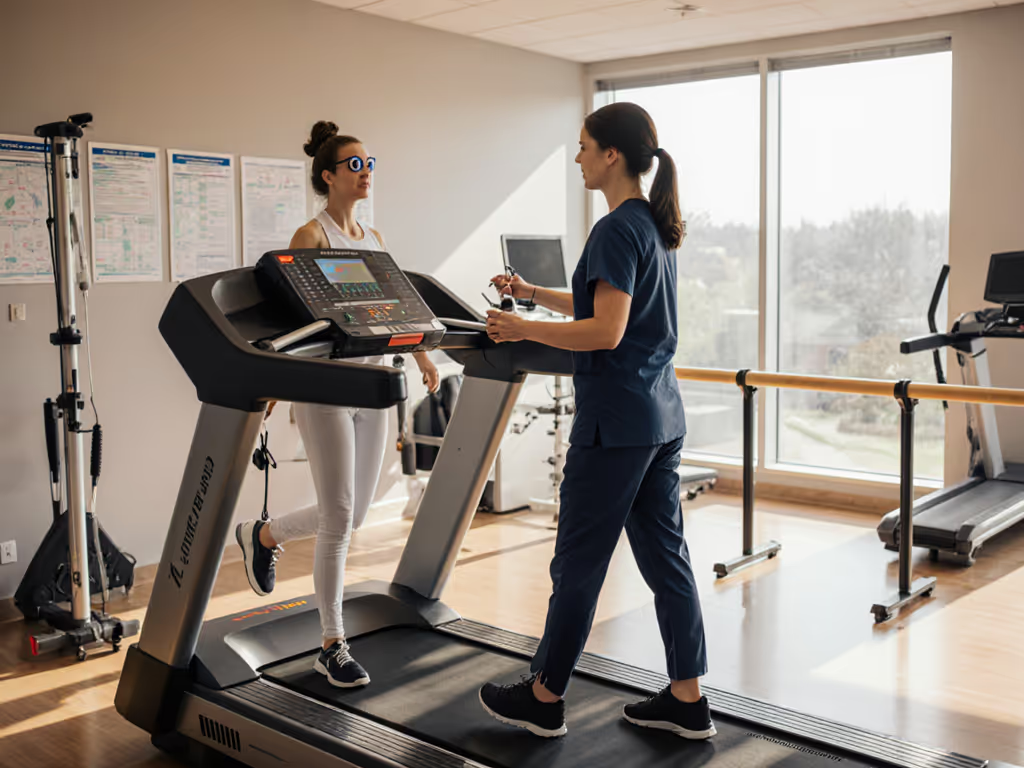
Start before the treadmill moves. Stand behind the belt with hands lightly on rails:
A 2022 meta-analysis of 41 studies confirmed rhythm stability matters more than absolute speed for reducing freezing episodes. Invest in motors with true continuous horsepower (CHP) ratings (not peak claims) to maintain this precision.
Strategic Cueing Integration
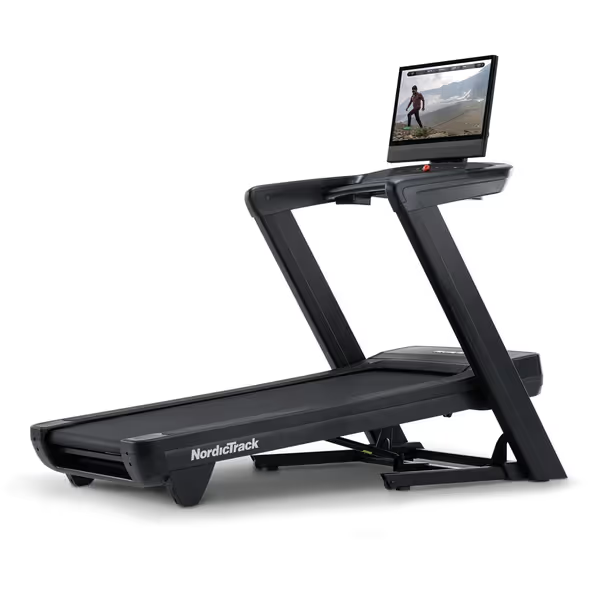
Nordictrack Commercial Series Treadmill
Foldable, iFIT-enabled treadmill with incline/decline and auto-adjust for personalized workouts.
Solid build quality, stable performance, and quiet operation.
Seamless incline (12%) and decline (-3%) for varied terrain.
Cons
iFIT membership is required for most features including SmartAdjust and streaming.
Customers praise the treadmill's build quality, noting its solid construction and stable performance, while appreciating its easy setup and user-friendly operation. The incline and decline features receive positive feedback for their seamless transitions, and customers find the machine quiet during operation. The screen size and functionality receive mixed reviews - while many appreciate the 16" display, one customer finds it mostly useless without iFit, and some report issues with functionality. Customers consider the treadmill worth its value.
Customers praise the treadmill's build quality, noting its solid construction and stable performance, while appreciating its easy setup and user-friendly operation. The incline and decline features receive positive feedback for their seamless transitions, and customers find the machine quiet during operation. The screen size and functionality receive mixed reviews - while many appreciate the 16" display, one customer finds it mostly useless without iFit, and some report issues with functionality. Customers consider the treadmill worth its value.
Visual cues on the belt reduce freezing by 35% according to Movement Disorders journal research. If your treadmill lacks built-in stripes:
Apply removable tape strips every 18-24 inches (match to user's typical step length)
Position cues 6 inches behind where feet contact belt, compensating for visual processing delays
For auditory cues, use Bluetooth earbuds (not room speakers) to avoid timing distortion from vibration
Note: Avoid flashing lights or rapidly changing cues because they increase fall risk in moderate-stage Parkinson's.
Deck Firmness Matters More Than You Think
"Cushioned" decks often create instability for Parkinson's users. Seek:
Uniform compression: Press across the deck surface (no soft spots near rails)
Controlled rebound: Should return 60-70% of force (like a tennis ball, not basketball)
Edge stability: Deck shouldn't flex >5mm when standing sideways at belt edge
I've seen users abandon "joint-friendly" treadmills because inconsistent cushioning made every step feel like ice. Gentle, precise feedback builds confidence.
Body-Aware Stride Matching
Measure Handrail Geometry
Handrails that sit below elbow height in standing position force forward lean, a freezing trigger. Ideal setup:
Stand naturally beside treadmill
Raise arms to 90° bend
Set handrails 0.5" above this height
Shorter users often need adjustable rails. Fixed-height rails under 38" commonly cause rail dependency that worsens posture over time.
Test Stride at Full Speed
Many "fit" tests happen at walking pace, missing critical elements:
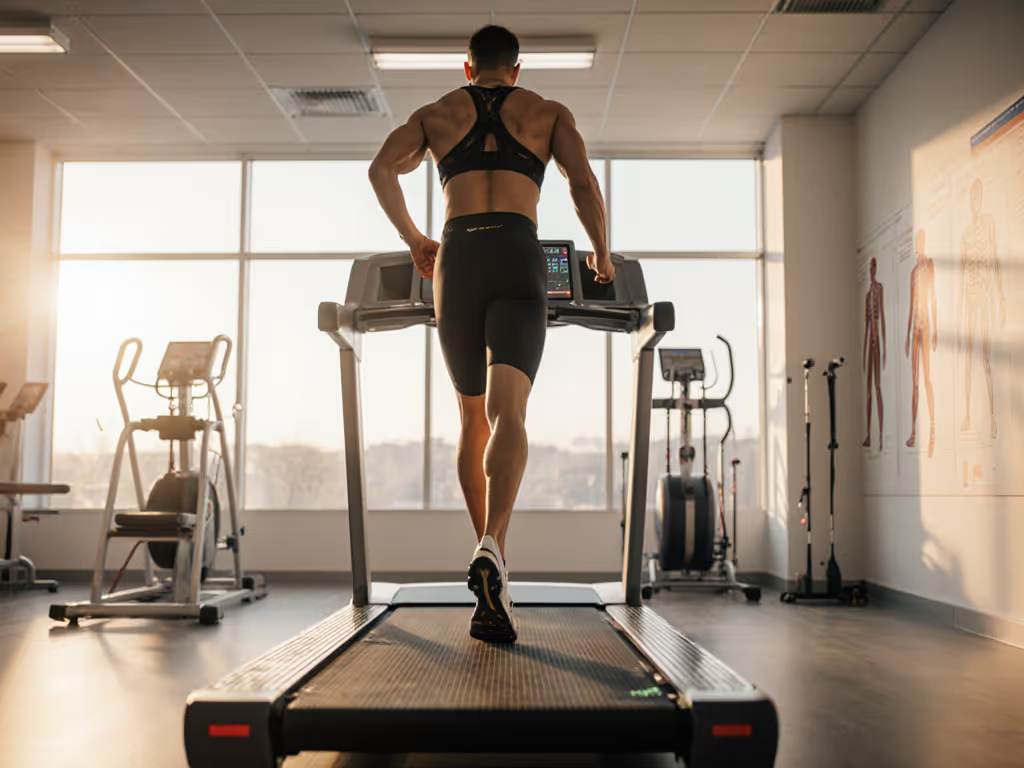
Run at 80% max comfortable speed for 90 seconds
Watch for: Toe dragging at belt end, rail grip tightening, or inconsistent step length
Critical check: At belt's front third, heels should clear deck edge by ≥2 inches
The Nordictrack Commercial 2450's 60" deck accommodates most strides safely, but measure your movement before believing marketing specs. A 6'4" friend cleared freezing episodes only after switching from a 55" deck, proving fit before flash every time.
Safety-First Cooldown Protocol
Gradual Deceleration Sequence
Halting abruptly triggers freezing. Follow this sequence:
Reduce speed by 0.3 MPH every 20 seconds
At 1.0 MPH, grasp rails with both hands
Step off ONLY when belt stops completely
Post-Session Balance Check
Before leaving the area:
Stand feet together for 10 seconds (eyes open)
If wobbling >3 times, repeat balance sequence tomorrow before treadmill use
Document any near-misses (they reveal hidden fit issues)
Actionable Next Step: Your Equipment Audit
This treadmill Parkinson's protocol works only when the machine matches your body. Before your next session:
Measure your actual stride on the deck (not theoretical calculations)
Verify handrail height aligns with bent-elbow position
Test emergency stop response time (<1.5 seconds) For a full checklist of fall-prevention features and best practices, see our treadmill safety tips.
Comfort and safety aren't luxuries; they're the metrics that determine whether therapy becomes habit. When equipment fits precisely, strides lengthen, freezing episodes diminish, and confidence grows. Measure once, train consistently, and let your body lead the way. Because in Parkinson's treadmill therapy, the most advanced feature isn't on the console: it's the space between your feet and the deck edge. Fit before flash, always.