Training, Technique & Workouts
Treadmill Chronic Fatigue Protocol: Pacing To Avoid PEM
21st May•10 min read
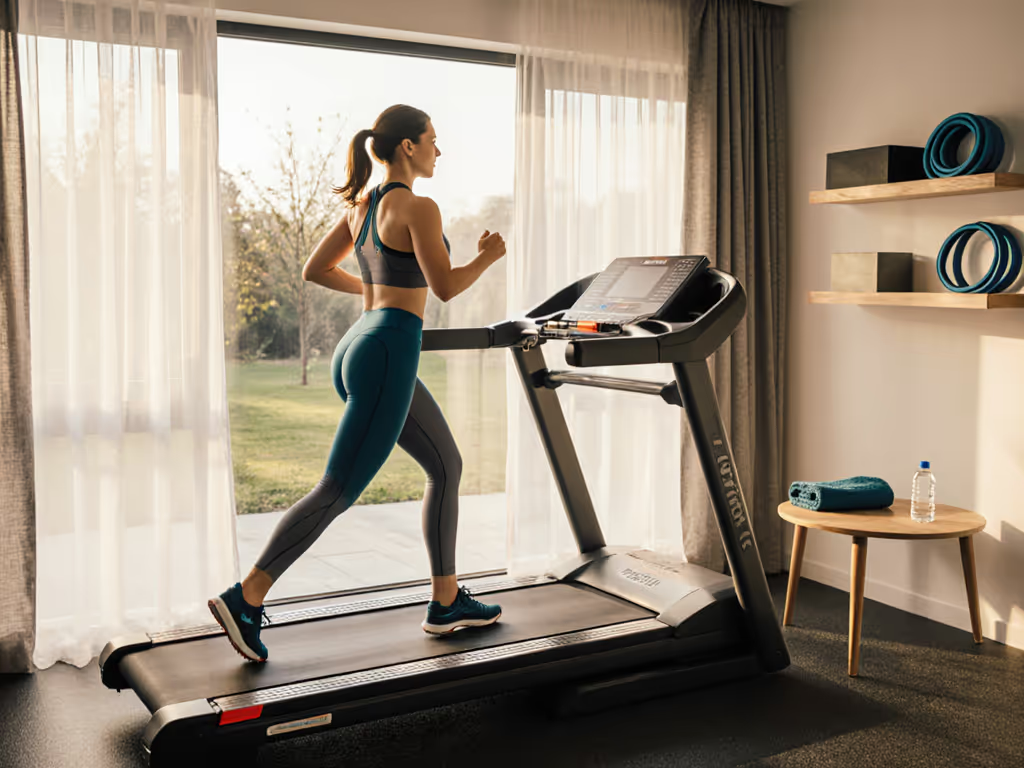
Women's treadmill training offers a powerful, accessible path to stronger bones and balanced hormones. When you choose a reliable treadmill for women's health, you're investing in more than cardio, you're building a foundation for lifelong wellness. To pick specs that truly fit your body, use our treadmill specs guide. Recent research confirms what many of us field technicians have seen firsthand: consistent, well-maintained treadmill use delivers measurable benefits for bone density and hormonal regulation. In this FAQ deep dive, we'll translate clinical findings into actionable routines that fit real life, because the best workout is the one you can stick with day after day. Remember: Preventive care beats warranty claims nine days out of ten.
Weight-bearing exercise like treadmill walking directly stimulates bone-forming cells through ground reaction forces. A pivotal NIH study tracked obese asthmatic patients on a 30-minute treadmill protocol (5-min warm-up, 20-min training at 60-80% max heart rate, 5-min cool-down) three times weekly for six months. To train in the right zone, compare sensor options in our treadmill heart rate accuracy test. Results showed significant increases in lumbar spine and radius bone mineral density (BMD) alongside improved calcium metabolism. Crucially, these gains only appeared with sustained effort (shorter programs <6 months showed minimal changes).
The most effective bone-building treadmills create stable, consistent impact. Wobbly machines force micro-adjustments that dissipate beneficial loading forces.
For you: Start with 20-minute sessions at 3-4 mph on 1-2% incline. Gradually increase to 30 minutes as your body adapts. Focus on posture: stand tall, engage your core, and avoid holding handrails excessively. For step-by-step technique, follow our treadmill running form guide. This mimics the "fast walking" strategy recommended by bone health experts for osteoporosis prevention, most effective because it mirrors daily movement patterns.
Yes, intelligently. During the follicular phase (menstruation to ovulation), your body handles higher intensity better due to rising estrogen. This is prime time for menstrual cycle treadmill training involving:
In the luteal phase (post-ovulation), progesterone dominance may cause joint laxity and fluid retention. Scale back to:
Track how you feel in a notes app, many clients report 15% fewer joint aches when aligning workouts with their cycle. This isn't magic; it's leveraging your body's natural hormonal rhythm for safer, more effective training.
Postmenopausal bone loss accelerates rapidly, up to 20% in the first 5-7 years. But research from JAMA Internal Medicine proves menopause treadmill workout protocols can offset this. In a landmark 26-month study, women doing high-impact treadmill routines (running at 70-85% max heart rate) maintained spinal BMD while the control group lost 2.3%. The magic came from:
One client, 58, reversed her osteopenia diagnosis through daily 30-min treadmill sessions. "I thought jogging would shatter my bones," she told me. "But with proper cushioning and form, my DEXA scans improved within a year." Start with incline walking (4-5% at 3.5 mph) if running feels intimidating (studies show it builds comparable hip BMD). If knee comfort is a concern, review our knee-friendly cushioning guide.
Here's where my mobile tech background proves crucial: Your machine's reliability directly impacts workout consistency, which drives hormonal benefits. I've seen too many clients quit because their treadmill developed squeaks, slippage, or erratic speed. Five minutes of weekly maintenance saves $500 in future repairs. Use our treadmill maintenance manual to prevent squeaks, slippage, and speed errors before they start. Implement this checklist:
Treadmill Health Preflight (Do Before Every Session)
When I began leaving these cards with fixes, callback rates dropped 80%. Machines stayed quiet and safe because owners caught issues early (like catching hormonal imbalances before they escalate). Remember: A bone density treadmill ritual only works when the machine works.
Absolutely, and here's the clinical proof. Treadmill training directly modulates:
The key is consistency at moderate intensity. One study showed obese postmenopausal women who walked 30 mins/day, 5 days/week for 12 weeks reduced CRP (inflammation marker) by 15%. But skip-and-start routines? Zero benefit.
Pro move: Pair treadmill time with natural light exposure (open blinds or use near windows). Morning light regulates cortisol rhythms, amplifying hormonal benefits. And keep your machine in a cool, dry space; overheating electronics cause speed fluctuations that derail structured hormonal balance exercise.
Your bones and hormones respond to consistent, intelligent movement, not heroic single efforts. Start with 20-minute treadmill sessions three times weekly. Focus on form over speed. Track how your body feels (energy, sleep, cycle regularity) for 90 days. Most importantly: maintain that machine like your health depends on it, because it does.
When treadmills arrive at my shop with seized belts and gritty rollers, I see preventable breakdowns, not worn-out machines. Five minutes of lube beats five hundred dollars of parts. Apply that same mindset to your health: Small, sustained actions create transformative results. Embrace the journey with buy once, keep moving confidence. Your strongest, most balanced self is built one reliable step at a time.
Further Exploration: Consult your physician before starting new exercise routines, especially with osteoporosis or hormonal conditions. Seek facilities with DEXA scan capabilities to track BMD changes. For treadmill-specific guidance, explore the American Council on Exercise's free workout library, no subscriptions required.