Treadmill Comparisons
Thermal Management Systems Compared: Cooling Efficiency & Design
10th May•13 min read
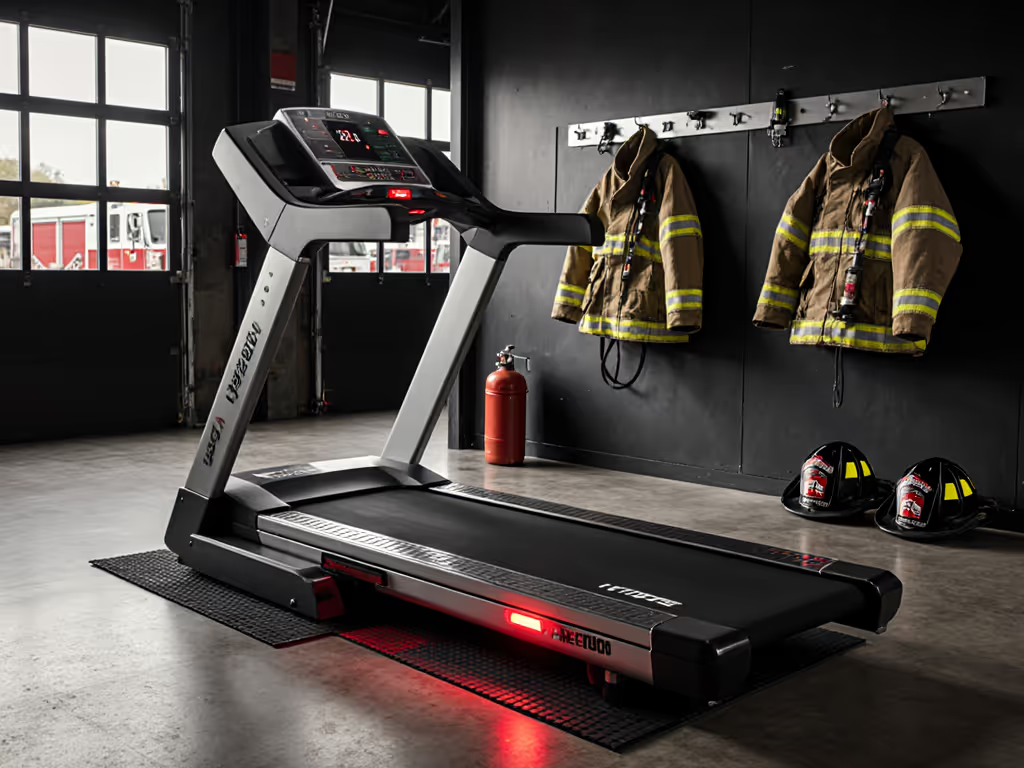
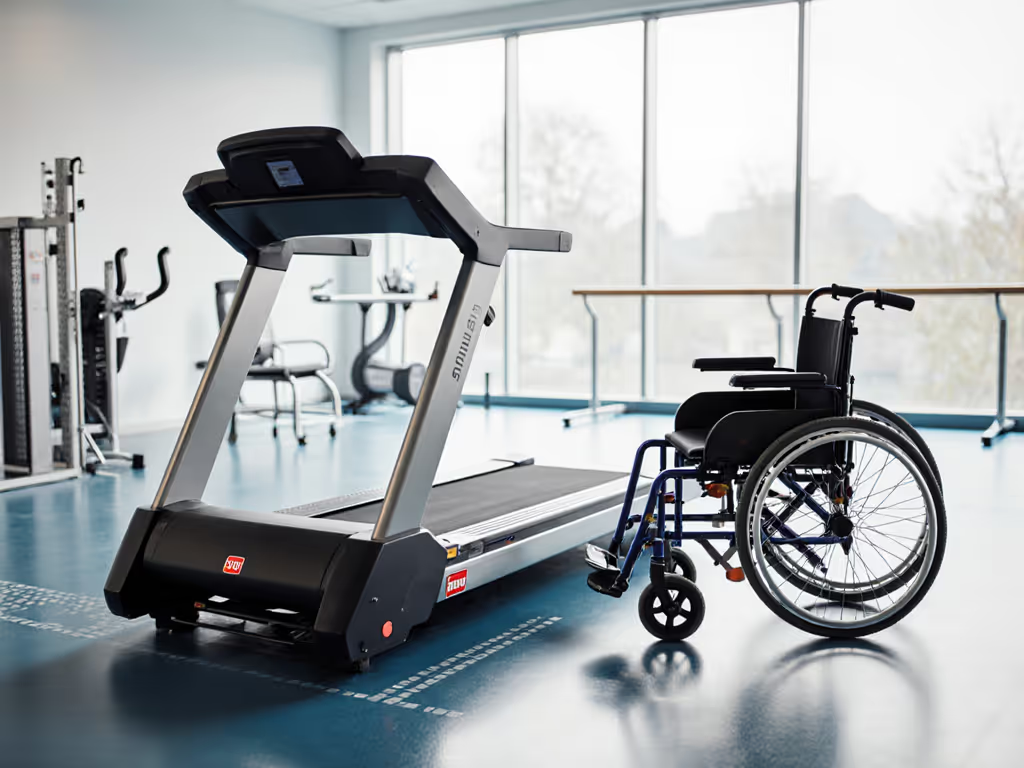
Firefighter treadmill training demands a different breed of machine than what sits in most home gyms. The equipment in firehouses and emergency response treadmill setups must withstand repeated high-intensity intervals, multi-user loads, 24/7 availability demands, and the wear patterns of crews training for rescue scenarios, not casual joggers. This guide compares the durability standards and spatial requirements that separate tactical treadmills from conventional models, using measurement-first analysis to help you choose equipment that respects both the machine's lifespan and your firehouse layout.
Commercial and tactical firefighter fitness treadmill models are engineered for environments where multiple users run back-to-back shifts. For broader context on build grades, see our home vs commercial durability comparison. Standard consumer treadmills typically assume 10-15 hours of use per week by one or two people; firehouse equipment operates 24 hours a day with crews rotating through morning, afternoon, and night workouts.[3]
The structural differences are quantifiable:
These upgrades reduce unscheduled maintenance, a critical factor when training downtime means lost conditioning time for the crew.
A treadmill rated for 40,000 miles does not just stay functional; it maintains accuracy and consistency. As consumer belts wear, deck flex increases, speed calibration drifts, and vibration rises. For fire academy preparation protocols and structured rescue simulation treadmill workouts, consistency is non-negotiable. An athlete training a specific pace for a tactical fitness test cannot tolerate belt slippage or speed variance that introduces 2-3 mph inconsistencies mid-interval.
Higher durability also means lower noise and vibration as the machine ages. A consumer deck that flexes after 2,000 hours transmits more vibration to the floor; a rigid, multi-layer deck maintains damping properties indefinitely. That stability preserves confidence during hard sessions.
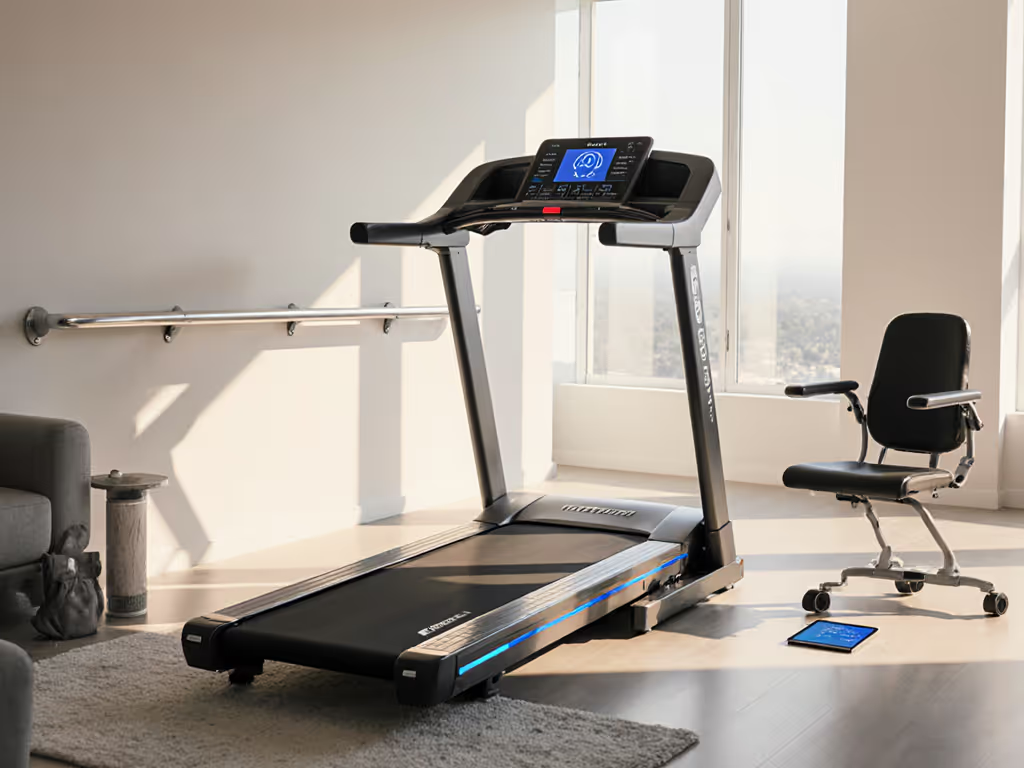
Firehouses operate under tight spatial constraints. See tight-space integration strategies for non-folding commercial units. You must plan for active treadmill space plus clearance for emergency dismounts, ventilation, and maintenance.
Commercial safety standards specify:[6]
For a typical tactical treadmill with a running surface of 26 inches wide by 70 inches long,[3] the practical footprint (including 3-foot side clearance and 6-foot rear clearance) occupies roughly 13 × 16.5 feet, or approximately 215 square feet. If your firehouse gym must accommodate multiple cardio machines, space becomes the limiting constraint far faster than budget.
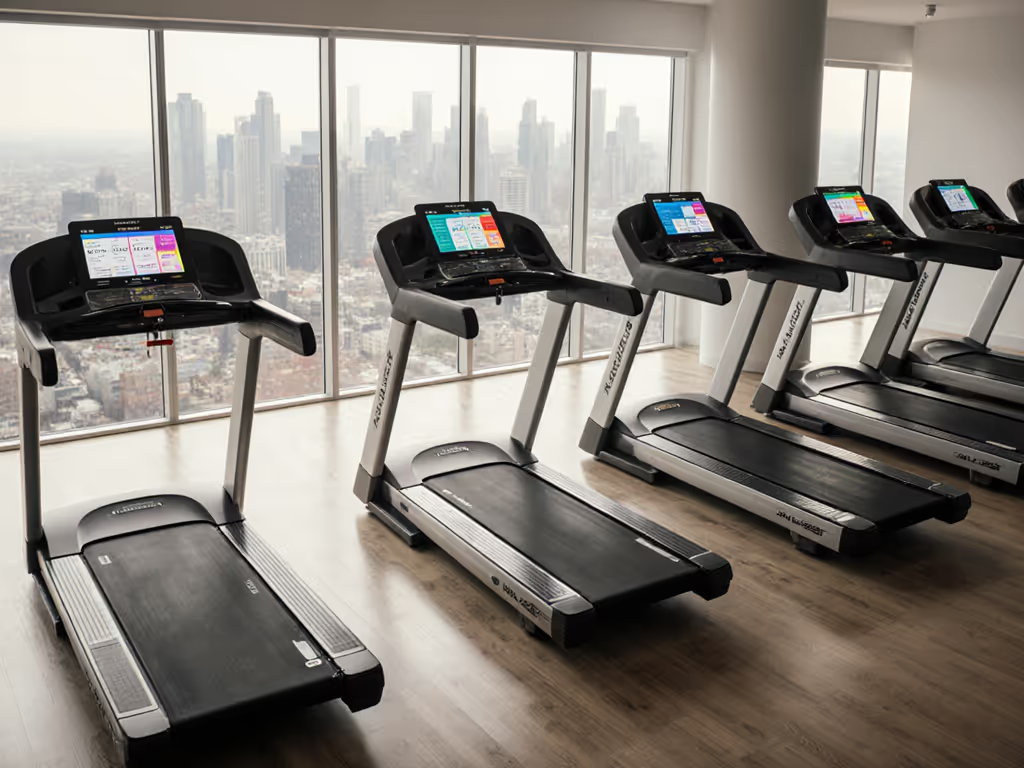
Not all tactical treadmills are identical. Common models include:[3]
| Model | Speed Range | Incline | Belt Dimensions |
|---|---|---|---|
| CardioFit | 0.5-12 mph | 15% | 21" W × 63" L |
| Sport | 0.5-28 mph | 40% | 26" W × 70" L |
| Elite | 0.5-31 mph | 40% | 26" W × 70" L |
The CardioFit model occupies less floor space but sacrifices stride room for taller athletes or those running at higher speeds (problematic for crews training tactical treadmill features like sprint intervals or hill climbing). The Sport and Elite models offer 26-inch width and 70-inch length, meeting or exceeding the minimum for safe running form across all user heights and speeds.[5]
Stride length typically requires a belt at least 60 inches long for runners over six feet tall; 70 inches provides a comfortable margin for athletes running above 10 mph without toe-strike concerns.[5]
Quiet miles count double when walls and floors are thin, but in a firehouse, you're also protecting equipment placement from becoming a bottleneck.
If space is truly constrained, verify whether a model folds and what its folded footprint becomes. Some tactical treadmills remain fixed installations; others fold to reduce depth by 30-40%. However, folded storage often conflicts with vibration isolation pads or base reinforcement, so confirm compatibility with your floor preparation before assuming a machine can compress into a standard equipment closet.
I designed isolation strategies after training for a relay race while living over a toddler's bedroom. Night miles meant experiments: I started with phone decibel apps, then invested in a calibrated meter. Sorbothane pads and a sand-filled platform became testbeds. When the meter dropped ten decibels and the baby slept through intervals, I started treating noise and vibration like any other spec: something you measure, not assume.[8]
Firehouse equipment generates noise from multiple sources:
If your firehouse gym sits above offices, administrative spaces, or shared living quarters, vibration isolation becomes mandatory, not optional. A tactical treadmill with a rigid, multi-layer deck reduces baseline vibration; adding vibration-isolating footpads beneath each foot reduces transmission to the floor by 40-60% across the frequency range.[6]
Ask vendors for independent acoustical test reports, not product spec sheets. Real-world noise varies by:
If you're installing a treadmill in a firehouse where noise leaks to adjacent spaces, budget for isolation: foam pads ($100-300), sand-filled platforms ($500-1,200), or decoupled mounting ($2,000+). We lab-tested vibration reduction mats and other accessories that measurably cut transmission. These costs are not afterthoughts. They are part of responsible placement planning. Quiet miles are kept miles, and kept miles build crew trust in the equipment.
Tactical training relies on precise workouts. A fire academy preparation program might specify intervals like "3 minutes at 8.5 mph, 0% incline; 2 minutes at 12 mph, 8% incline." If the treadmill's belt speed drifts ±0.5 mph or incline motor misaligns, the athlete cannot validate fitness improvements or replicate race-day conditions.
Commercial and tactical models are calibrated to ±0.1 mph speed accuracy and ±0.5% incline accuracy.[3] Consumer models often drift to ±1-2 mph over time. Request calibration certificates and ask whether the vendor recalibrates machines annually or on-site.
A tactical treadmill costs $3,000-8,000 upfront. Over ten years, the total cost multiplies: Follow our treadmill maintenance manual to reduce service calls and extend deck/belt life.
Tactical models justify higher upfront cost because lower maintenance needs, longer durability, and consistent accuracy reduce total cost of ownership by 30-50% versus consumer alternatives over ten years.
A firehouse crew may include athletes ranging from 160 lb. to 280 lb., with different running styles, some heel-strikers, others midfoot. Tactical treadmills are rated for 300-400 lb. weight capacity and engineered to maintain speed/incline accuracy across that range without wobble or hesitation.[2][3]
Consumer models often degrade under multi-user heavy loads: motors overheat, belts slip on incline, and decks flex asymmetrically. After 2,000-3,000 hours of crew use (roughly 1-2 years in a firehouse), consumer machines show visible wear. Tactical models remain stable and quiet after 40,000 miles.[3]
Q: Should we buy one large treadmill or two smaller ones for space efficiency?
A: One large, durable tactical model with a 26" × 70" deck is preferable to two consumer machines. A single machine reduces maintenance burden, occupies less total floor space (one 13 × 16.5 ft. footprint vs. two ~11 × 14 ft. footprints), and guarantees consistent training conditions. If space is under 215 square feet total, prioritize a compact tactical model (like the CardioFit) over a consumer machine; smaller decks still outlast consumer alternatives and maintain accuracy under crew load.
Q: Do we need vibration isolation if we're on a concrete slab?
A: Yes, if the slab is suspended above offices or shared spaces. Concrete is an excellent vibration conductor. A treadmill running at 10 mph generates 50-70 dBA airborne noise plus floor-borne vibration that transmits through concrete to spaces below. Isolation pads reduce both by 40-60%. If the slab is over bedrock or unoccupied basement, isolation is less critical but still worthwhile for noise control within the firehouse.
Q: Can we move a tactical treadmill between stations?
A: Not easily. Most tactical models weigh 400-600 lb. and require anchoring to floor to maintain vibration performance. Transport damages isolation pads and often voids warranty. If you need portability, specify "relocatable" installation (bolts that can be unset, isolation pads that roll). Budget $500-1,000 for professional rigging if you relocate more than once every three years.
Q: How do we maintain accurate speed calibration over time?
A: Request a calibration kit and training from the vendor. Most tactical models allow crew to re-zero the speed sensor (typically via a calibration magnet or app) quarterly. Drift beyond ±0.1 mph after recalibration signals belt wear; schedule replacement before speed accuracy deteriorates further. Consult the maintenance manual; many vendors publish recommended service intervals (e.g., every 2,000 hours).
Q: What's the warranty coverage on tactical treadmills?
A: Commercial and tactical treadmills typically carry 3-5 year warranties on frame and welds, 2-3 years on motor and electronics, and 1-2 years on belt and rollers. Verify whether the warranty covers commercial multi-user duty (some consumer warranties void coverage if the machine exceeds 20 hours/week use). Ask whether parts are stocked locally or require drop-ship (which can add 1-2 weeks to repair time).
Choosing a rescue simulation treadmill for your firehouse is not simply a durability decision, it is a statement that crew fitness is non-negotiable, and that the equipment will be ready night after night. Measurement-first planning ensures the machine fits your space, serves your crew, and stays quiet enough to remain a tool, not a friction point. When a treadmill respects your neighbors, your floors, and your budget over ten years, quiet miles are kept miles, and kept miles build resilience where it counts most.