Slat Belt Treadmill Comparison: Comfort & Durability
By Tomasz Lewandowski • 24th Apr
A slat belt treadmill comparison reveals why many runners and fitness enthusiasts are moving away from traditional continuous belts (not for flashy tech, but for genuine protection where it matters: your joints and your stride). The question isn't just which model looks best; it's which one fits your body, your space, and your training goals without demanding expensive repairs or shortcuts on safety. Understanding the difference between the best joint-friendly treadmill options means weighing shock absorption, real durability under high mileage, maintenance reality, and total cost of ownership.
I learned early on that specifications mean nothing if the platform doesn't match your frame. A back-rail scrape during tempo work taught me that lesson hard (long legs, undersized deck, and years of measuring afterward). That's when I started asking clients about effective running area, handrail clearance, and ceiling room at full incline. The first time a compact machine fit a 6'4" stride safely, I realized ergonomics aren't a luxury feature; they're the foundation of consistency. Your stride writes checks; the deck must cash them.
How Slat Belt Treadmills Work
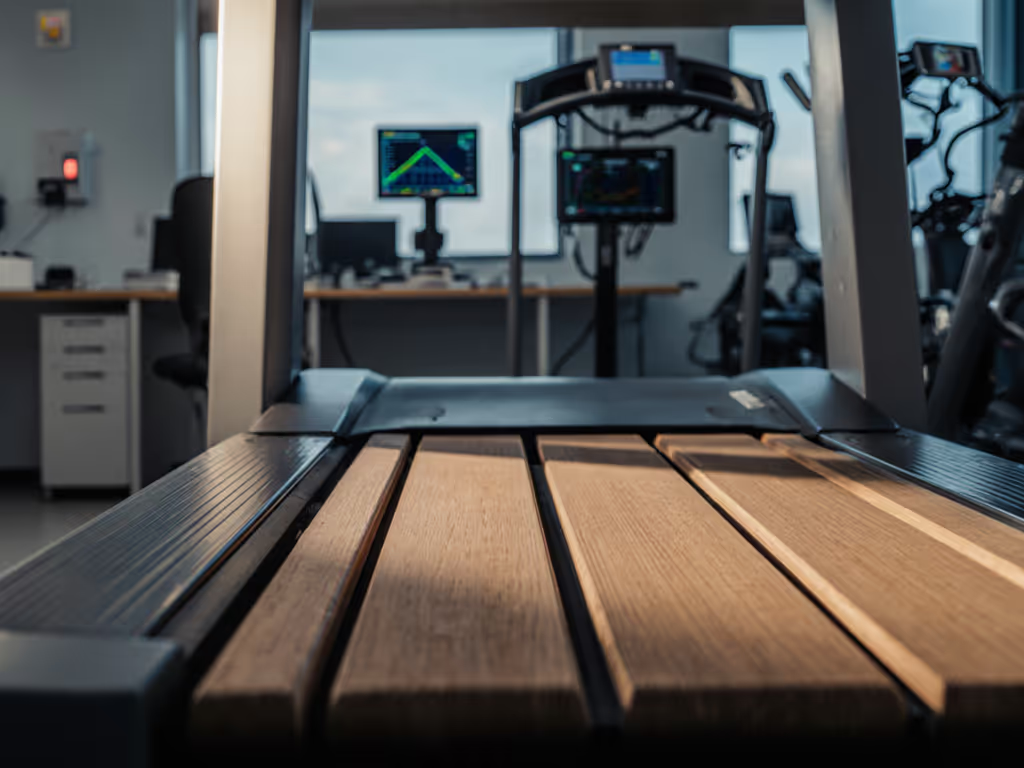
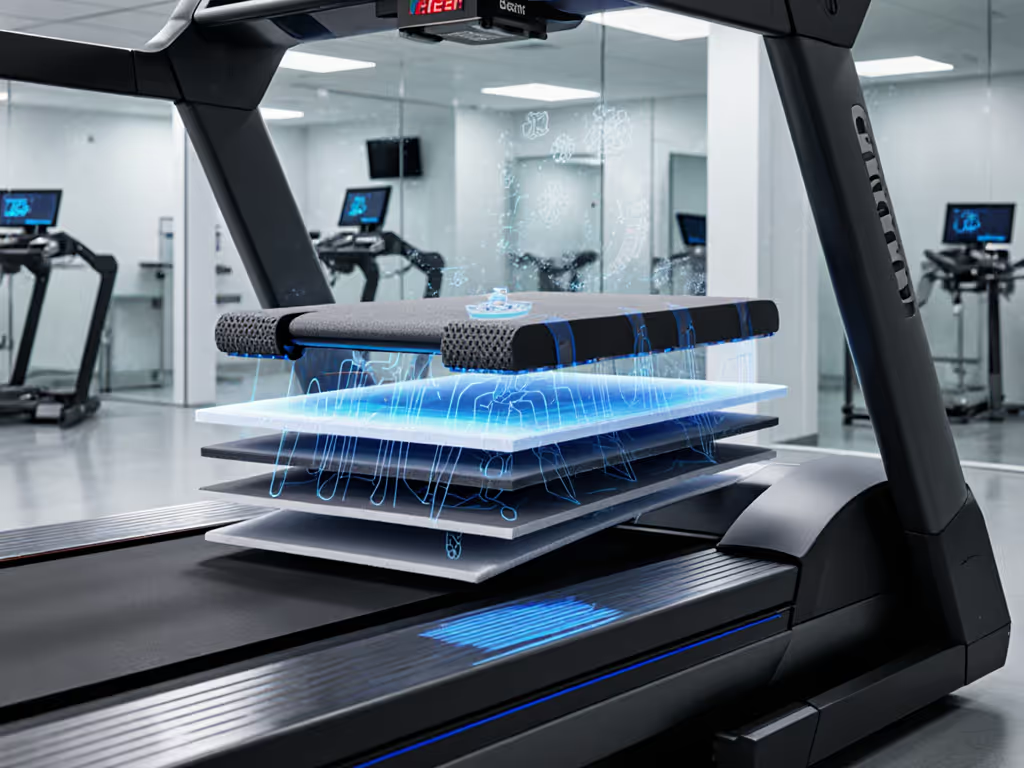
Slat belt treadmills replace the continuous rubber belt of traditional treadmills with individual interlocking or independently mounted rubber slats. Instead of one rigid surface, you're running on a system where each slat absorbs shock independently. This creates a fundamentally different running experience. For a deeper dive into slat belts and other high-end features, see our advanced treadmill tech guide.
When you step on a traditional treadmill, the continuous belt creates a fixed impact pattern, your foot lands, the belt stays firm, and your joints absorb the shock. On a slat belt system, each slat flexes slightly under your foot strike, then springs back. The surface adapts to your foot rather than forcing your foot to adapt to a rigid surface.
Many runners report this feels closer to outdoor running than any other indoor option. The gaps between slats allow for natural micro-movements your feet expect, and the shock isn't concentrated in a single impact zone, it's distributed across multiple points.
Joint Comfort and Impact Absorption
This structural difference translates directly to joint health. Traditional treadmill decks provide cushioning, but that cushioning is uniform and static. Over time, the repetitive nature of consistent impact patterns can contribute to stress injuries in the knee, hip, and ankle.
Slat belt systems change this equation. Because each slat absorbs shock independently, the overall impact collision is lower, and the running surface is gentler on joints. The reduced vibration is measurable (slat systems generate less energy transmission through the floor), which also matters if you live in a shared building or apartment. For lab-tested shock numbers and deck comparisons, check our cushioning impact comparison.
Many runners transitioning from traditional to slat belt treadmills report significant reductions in discomfort, particularly for those with pre-existing sensitivity in the knees, hips, or ankles. The mechanism is straightforward: lower impact means lower repetitive stress, and lower stress means more consistent training without pain-driven interruptions.
The consistency builds from comfort. When your joints feel protected, you show up for workouts more reliably. Protect your joints and your adherence stays intact.
Durability: Maintenance Costs and Long-Term Value
Here's where the comparison gets practical. Traditional treadmill belts typically need replacement after 3,000 to 5,000 miles. They also require ongoing maintenance: lubrication schedules, alignment tracking, potential roller issues, and periodic deck replacement.
Slat belt maintenance costs tell a different story—see our slat vs traditional maintenance comparison. There's no lubrication, no belt alignment fussing, and no deck flipping. The individual slats are designed to tolerate high mileage (often rated for 150,000+ miles), and when a slat does eventually wear, it's replaced individually, not as an entire system.
This translates to real money. Over a 10-year span, a traditional treadmill might incur $300 to $800 in maintenance and parts. A slat belt system, run in the same period, could cost $0 to $200, depending on use.
The motors driving slat belt systems are typically commercial-grade, not the light-duty units in consumer treadmills. A commercial slat belt durability profile often includes continuous-duty motors designed for gym environments (machines that run 8+ hours per day without failure). Consumer slat systems inherit that reliability. The motor in the SOLE ST90, for example, is the same AC commercial motor found in gym equipment, built to maintain smooth power at high incline and handle multi-user loads.
Over a 5 to 10 year window, buying a slat belt system isn't really more expensive; it's often cheaper once maintenance is factored in.
Cushioning Profile and Stride Matching
The cushioning approach differs across systems. Woodway 4Front cushioning (found on Woodway commercial machines) uses a flexible deck with tuned elasticity to absorb shock while maintaining responsiveness. Slat systems like those in the SOLE ST90 use interlocking rubber slats designed for consistent flexibility across the running surface, with each slat providing individual compliance.
Neither approach is "wrong," but the implications differ:
- Woodway systems prioritize uniform cushioning and are often curved (manual), which builds more glute and hamstring engagement but requires more power from you.
- Slat belt systems distribute cushioning independently, which feels more adaptive and natural, though the specific profile depends on slat density, rubber hardness, and spacing.
The key is matching the treadmill impact absorption profile to your stride length, your body weight, and your typical running speed. A 5'6" runner at 150 lbs has different force dynamics than a 6'4" runner at 210 lbs. A slat belt running surface that's 60" long works well for the first; it's marginal for the second.
This is where measurement becomes non-negotiable. The effective running area must accommodate your stride comfortably, with room for acceleration without compromising safety. Buy once, keep, and that starts with fit.
Slat Belt Models: A Practical Comparison
The market offers several serious options. Here's what separates them:
SOLE ST90 ($3,699.99)
- Running surface: 60" × 20" (commercial dimensions)
- Motor: 2.0 HP AC commercial-grade, up to 12.5 MPH, 15 incline levels
- Dual mode: motorized + "Free Mode" manual
- Slats: interlocking rubber
- 3-year total cost: $3,699.99 (no subscription)
This model delivers premium slat belt performance at a fraction of commercial Woodway pricing (which tops $10,000+). The 60" deck is ideal for runners up to about 6'2" with standard stride lengths. The dual-mode option adds versatility (you can train motorized or manually resist the belt on the same machine). For a direct head-to-head on running feel, noise, and upkeep, read our Matrix T75 vs Sole ST90 comparison.
Peloton Tread+ ($5,995 MSRP)
- Running surface: 67" × 20"
- Manual + motorized capability
- Slat design: 59 individual slats
- 3-year total cost: ~$7,879 (includes mandatory monthly subscription)
The longer deck (67") suits taller runners better. However, the total cost of ownership includes recurring subscription fees, which shift the equation significantly. If you want class-based motivation, it's worth considering; if you value independence and lower ongoing cost, it's a trade-off.
Woodway Curve LTG ($3,995 to $5,500+)
- Manual curved slat design
- TPE-covered slats
- Natural running feel
- 3-year total cost: $3,995 to $5,500 (no subscription)
Manual curved treadmills are more demanding, about 30 to 40% harder than motorized or flat options, but they excel for athletes building explosive power and glute strength. The curve design mimics natural running biomechanics closely. Trade-off: you're providing all the propulsion, so it's intense.
XPT Slat Belt Treadmill ($6,400 to $6,900)
- 62 individual vulcanized rubber slats
- Ergonomic handles with thumb controls
- Three emergency stops
- Wireless phone charging
- Lower maintenance than traditional treadmills
The XPT sits at a premium price point with commercial-grade construction and additional features. It's robust, but you're paying for bells that some users won't need.
The trade-off in any slat belt comparison comes down to deck length (stride fit), motor quality (consistency and longevity), total cost including subscriptions, and whether you need motorized convenience or prefer the challenge of manual resistance.
Space, Safety, and Measurement
This is where body-first fit matters most. Before comparing specs, measure three things:
Effective running length: What's your typical stride? Add 12 to 18 inches for sprint acceleration. A 60" deck works for most runners under 6'2", but if you're taller or have a long stride, 67" is safer. If you're over 6'2", see our tall runner treadmill guide.
Ceiling height at full incline: Raise the treadmill to 15% incline (max on many models) and confirm you have at least 6 feet of head clearance. This matters in basements and lofts.
Floor footprint and folding: Does the folded machine fit your storage space? Can it roll through your doorway or down the stairs?
Skipping these measurements is how people end up with machines that don't fit their space or their body, which kills consistency, and regret is expensive.
Making Your Choice: Next Steps
- Measure your stride and space before comparing models. Effective deck length and ceiling clearance are non-negotiable (they determine whether the machine will actually work for you).
- Calculate total cost over 5 to 10 years, not just the price tag. Add realistic maintenance, subscriptions, electricity, and parts. Slat belt systems typically win here due to lower maintenance, but Peloton's subscription cost shifts the equation.
- Test noise levels if possible. Slat systems are typically quieter than traditional belts, but motor quality varies. If early mornings are important, this is worth investigating with existing owners.
- Prioritize durability markers: commercial-grade motors, high mileage ratings (150,000+ miles), and established warranty support. Buy once, keep.
- Match the model to your training style. If you value consistency, form, and joint protection over intensity, the SOLE ST90's motorized option and long-deck design fit most runners. If you want raw power-building and are willing to push harder, a manual curved system like the Woodway Curve LTG rewards that intensity.
A slat belt treadmill comparison isn't just about comparing numbers; it's about finding a machine that fits your body, your home, and your training reality. Once you do, consistency becomes automatic, and injuries become far less likely. That's the real feature list.
Related Articles

Treadmill Comparisons
Astrophotography Treadmill Setups: Verified Stability & Noise
11th Mar•9 min read