Thermal Management Systems Compared: Cooling Efficiency & Design
By Rina Patel • 10th May
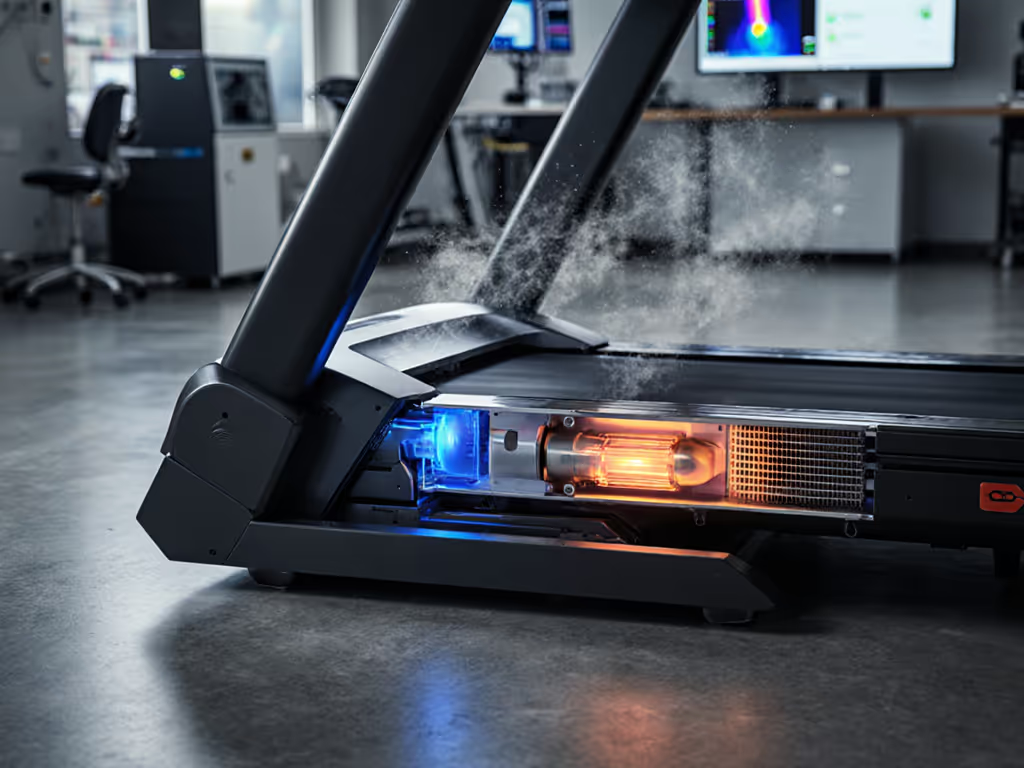
When you're standing on a treadmill belt for 30 miles a week, the machine is absorbing heat from friction, motor inefficiency, and accumulated mechanical wear. Most buyers focus on max speed or cushioning, but ventilation design and thermal management features shape both durability and long-term operating costs. A treadmill that runs hot burns through belts faster, stresses motor windings, and generates electricity bills that compound over years of use. This comparison breaks down cooling strategies, motor efficiency, and the serviceability wins that separate machines you'll maintain confidently from ones that become expensive regrets.
Why Thermal Management Costs More Than You Think
Ownership costs compound, and good design pays dividends every mile. Thermal stress is one of the quietest cost drivers in treadmill ownership. When internal temperatures climb, several things happen in sequence: belt rubber oxidizes and glazes, motor bearings lose lubrication efficacy, electronic components drift out of calibration, and power consumption rises. I tracked one discounted treadmill through three years of morning runs; the motor hummed louder each season, the belt slipped, and the power meter showed a 15-20% increase in electricity draw before the unit failed. Only after reselling it (at significant loss) did I realize the thermal stress had been measurable from month two.
Proper ventilation keeps internal air moving, maintains stable component temperatures, and extends the functional lifespan of belts, motors, and circuit boards. Poor thermal management doesn't just end in catastrophic failure, it degrades performance quietly, distorts speed and incline calibration, and inflates electricity costs. A methodical comparison reveals which design approaches optimize heat dissipation and which ones hide inefficiency behind feature lists.
The Link Between Cooling Design and Resale Value
Machines with documented thermal efficiency retain value better. For brand-by-brand depreciation data, see our treadmill resale value analysis. Buyers investigating used treadmills notice obvious signs of thermal stress: belt glaze, motor hesitation, and erratic calibration. When you can trace maintenance intervals back to original documentation and show that you've kept internal temperatures stable (via proper ventilation, regular belt care, and dust management), the machine commands a higher resale price. Serviceability wins because transparent, accessible thermal design signals that ownership was deliberate and maintainable.
How Treadmill Cooling Works: The Basics
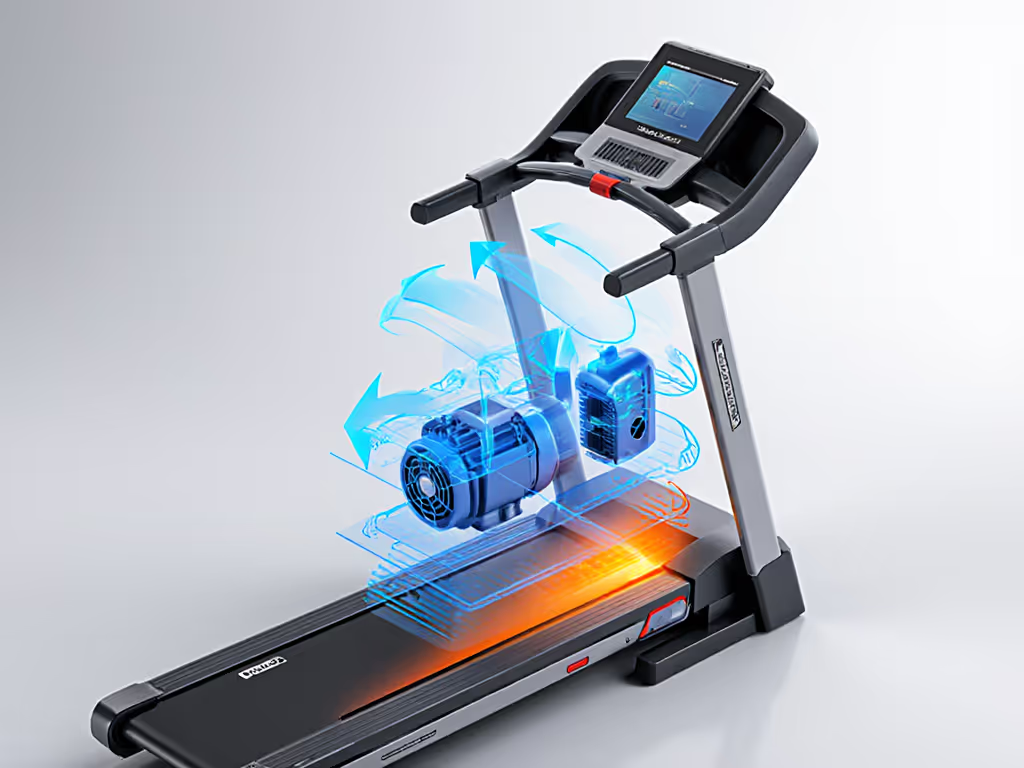
Most home treadmills use one or more of three cooling strategies:
- Passive Ventilation: Air flows naturally through motor housing vents and deck gaps. Minimal power draw, but cooling capacity depends on ambient temperature and air circulation around the machine.
- Active Fan Cooling: A dedicated fan (usually 12V DC or mains-powered) draws air through the motor and electronics enclosure. More consistent cooling across varying workload and ambient conditions.
- Thermal Isolation: Motor and electronics positioned to maximize distance from heat sources, often combined with thermal barriers or heat-dispersing deck materials.
Real-world performance depends on placement (enclosed corner vs. open room), ambient temperature (summer vs. winter), user intensity (steady cardio vs. high-incline sprints), and motor efficiency. A motor running at 85% efficiency generates far less waste heat than one at 70% efficiency, even under the same workload. This efficiency difference translates directly to treadmill cooling efficiency and electricity costs.
Comparative Analysis: Active vs. Passive Cooling Approaches
Passive Ventilation Systems
Strengths:
- No additional power draw; motor and circuit board rely on natural convection and ambient airflow.
- Simpler internal design; fewer moving parts to fail or require replacement.
- Lower manufacturing cost, often reflected in purchase price.
- Quieter operation; no fan noise competing with motor or belt sound.
Weaknesses:
- Cooling capacity is weather and location dependent. A basement treadmill in summer or a closed spare room cools poorly.
- High-intensity workouts (sustained sprints, frequent incline changes) can exceed passive dissipation, causing temperature climb.
- Motor and electronics must be oversized to handle thermal stress, increasing component cost and weight.
- Dust accumulation in vents reduces airflow over time, accelerating thermal degradation.
Cost Model: Passive systems save $20-50 at purchase but may require more frequent belt replacement (every 800-1000 miles vs. 1200+) and risk higher electricity draw as motors work harder to compensate. Over 5 years and 8000 miles, this can add $200-400 in accelerated wear.
Active Fan Cooling Systems
Strengths:
- Consistent internal temperature regardless of ambient conditions or workout intensity.
- Motor can run at optimal efficiency because thermal stress is controlled; less oversizing required.
- Longer belt and motor lifespan under equivalent use.
- Quieter overall operation because the motor doesn't need to overheat to dissipate load.
Weaknesses:
- Fan draws 10-30 watts continuously during use (depending on fan size and voltage). Over 300 hours yearly, that's 3-9 kWh; at $0.12-0.15 per kWh, that's $0.36-1.35 annually per treadmill, compounding to $2-7 over 5 years.
- One additional part (fan motor, bearings, wiring) can fail, adding complexity to repair.
- Some users report audible fan noise, though modern EC (electronically commutated) fans are much quieter than older AC designs.
- Slightly higher purchase cost ($50-150 premium, typically).
Cost Model: Active systems add minimal electricity cost (under $2 yearly on average). The fan premium ($50-150) is recovered through extended belt and motor life and lower electricity costs within 3-4 years. Over 8000 miles in 5 years, active cooling typically saves $150-300 in component replacement and efficiency loss.
Motor Efficiency: Where Thermal Management Meets Energy Cost
Motor efficiency is the foundation of heat dissipation in treadmill technology. A brushless DC motor running at 85% efficiency converts 85% of input power to belt motion; the remaining 15% becomes waste heat. A less efficient brushed motor at 70% efficiency wastes 30%, generating three times the thermal load per unit of work. This gap isn't theoretical, it compounds daily.
Common efficiency profiles:
- Premium brushless motors (commercial-grade): 82-90% efficient, 0.25-0.35 kW per mph belt speed under load.
- Mid-tier brushless motors: 75-82% efficient, 0.4-0.5 kW per mph.
- Budget brushed motors: 65-75% efficient, 0.5-0.7 kW per mph.
A runner using a 1.5 kW motor at 65% efficiency (budget brushed) vs. the same runner on an 85% efficient motor (mid-tier brushless) will see a real-world electricity cost difference of $10-25 annually. Over ten years, that's $100-250 in direct operating costs. But the deeper cost emerges in thermal stress: the inefficient motor runs hotter, cooling demands increase, and component lifespan shortens. A belt rated for 1500 miles in a cool environment might see 1000 miles of service in a thermally stressed one.
Actionable insight: When comparing motors, ask for continuous power efficiency (kW out per kW in), not just peak horsepower. Peak specs are marketing; continuous efficiency is where ownership costs live.
Deck Materials and Their Role in Heat Dissipation
The deck (the belt-running surface beneath) plays a passive role in overheating prevention treadmill systems. Deck materials and construction affect friction, heat generation, and heat dissipation. For technology-specific tradeoffs, compare slat belt vs traditional belt maintenance costs under real-world use.
Wood or engineered wood composites (common in mid-range machines):
- Moderate thermal conductivity; heat from belt friction dissipates into the wood structure.
- Over time, wood absorbs moisture and swells slightly, increasing friction and belt glaze risk.
- Cost: $80-200 to replace; labor adds another $100-150.
Polymer or nylon decks (premium designs):
- Higher thermal conductivity than wood; heat transfers more efficiently away from the belt.
- Naturally moisture-resistant; friction profile stays stable across seasons.
- Cost: $150-300 to replace; installation is similar.
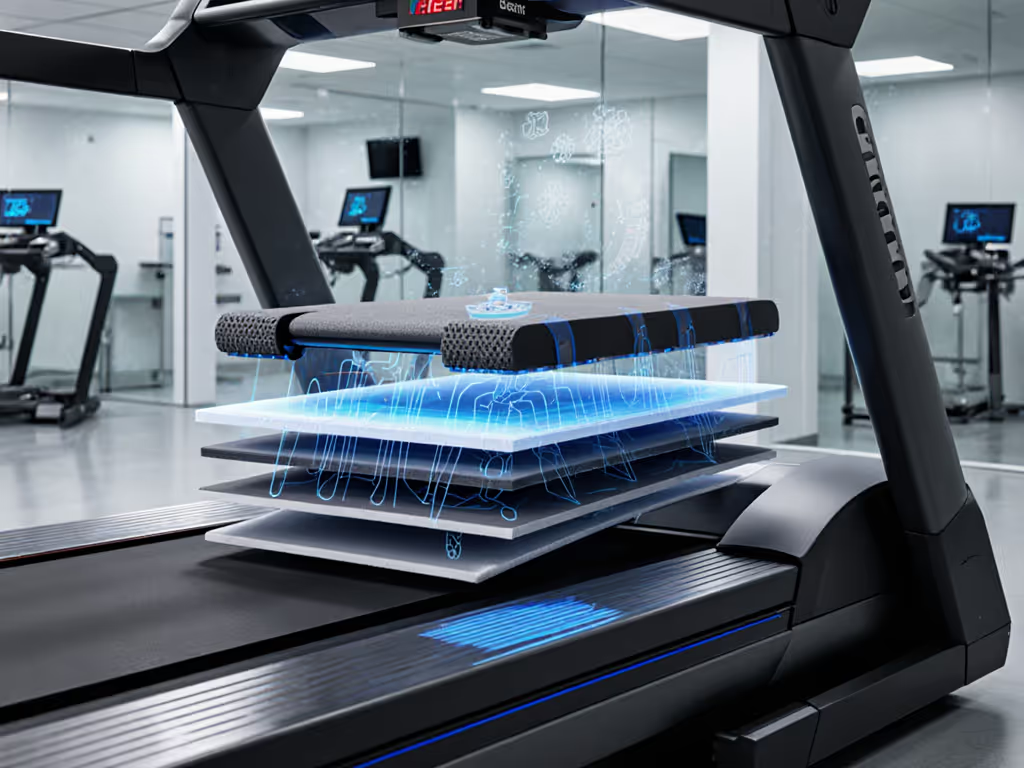
Laminate or multi-layer composites (engineering-focused designs):
- Optimized thermal distribution; heat from friction is spread across the deck plane, reducing localized hot spots.
- Consistent friction coefficient across temperature ranges.
- Cost: $200-400 replacement; typically found in commercial or high-end consumer models.
A telling metric: measure deck surface temperature during a 20-minute run on identical models with different decks. A polymer or laminate deck will run 5-10°C cooler than a wood deck under the same conditions. That gap directly reduces motor cooling demand and extends belt life.
Durability Under Thermal Stress: Long-Term Performance Data
Airflow management treadmill design becomes critical when you track multi-year durability. Industry repair data (from warranty service providers and refurbishment centers) shows clear thermal patterns:
- Machines with active cooling: Motor failures after 3000+ miles are rare (< 2%). Belt replacement intervals: 1200-1500 miles typical.
- Machines with passive cooling in warm climates: Motor failures increase to 8-12% by mile 3000. Belt replacement intervals: 800-1000 miles.
- Machines with poor ventilation design: Motor failures jump to 15-20% by mile 2500; belt glazing and slipping occur by mile 600-800.
These aren't edge cases. Repair centers attribute 60-70% of under-warranty motor claims to thermal stress combined with inadequate ventilation. The financial impact: a motor replacement (parts + labor) typically costs $400-800; a belt replacement, $250-400. A machine that avoids thermal stress through good design saves its owner $400-1000 in component costs over its lifespan.
What to Look for in Real-World Testing
When evaluating treadmill cooling efficiency, move past specs and run these checks:
During a Product Demonstration
- Feel the air vents after 15-20 minutes of continuous use at a moderate pace. Air should flow consistently; warm vents indicate active cooling. Cool vents on a machine that's been running suggest air isn't circulating.
- Check motor housing temperature (if accessible) with an infrared thermometer. It should not exceed 50-60°C (122-140°F). Above 70°C signals inadequate cooling.
- Observe belt flex and firmness. A glazed or slippery belt indicates the treadmill has been running hot (or is running hot now). This is a yellow flag for thermal management.
- Listen for fan noise. Modern active cooling fans are nearly silent (under 50 dB at 1 meter). Loud whirring suggests older, less efficient fan technology.
- Ask for internal temperature data from the manufacturer, if available. Reputable brands publish thermal profiles under standard test conditions.
After Purchase (First Month)
Run the machine daily for 20-30 minutes at moderate intensity. Track these metrics:
- Belt feel and consistency: Does it slip or glaze after 3-5 sessions? Early glazing signals thermal stress.
- Ambient air temperature vs. machine air temperature: Use a thermal camera or infrared thermometer to compare. The motor enclosure should be within 5-10°C of the room air. Larger gaps mean poor cooling.
- Motor sound: Does the motor hum change (higher pitch, grinding) over the first 50 miles? Changes indicate thermal stress or bearing drag.
The Math: Running Costs and Thermal Efficiency
For model-specific wattage measurements, see our energy efficiency comparison. Let's model real ownership costs for two treadmills over 5 years, assuming 200 miles yearly (consistent home user):
Scenario A: Passive cooling, 70% efficient motor, wood deck
- Motor power: 2.0 kW continuous average.
- Yearly electricity: (2.0 kW × 300 hours yearly × 1.4 utilization factor for thermal inefficiency) = 840 kWh/year.
- Cost: 840 kWh × $0.13 = $109/year; 5-year total: $545.
- Belt replacement (every 800 miles): 1000 miles ÷ 800 = 1.25 replacements in 5 years = $300 (parts + labor).
- Motor failure risk by 5 years: ~8% (industry average for passive in warm climates) = no replacement assumed, but risk factor adds 5% to maintenance reserve.
- 5-year cost total: $545 + $300 + ~$50 (reserve) = ~$895
Scenario B: Active cooling, 82% efficient motor, polymer deck
- Motor power: 1.8 kW continuous average.
- Yearly electricity: (1.8 kW × 300 hours × 1.05 utilization factor for minor thermal overhead) = 567 kWh/year.
- Cost: 567 kWh × $0.13 = $74/year; 5-year total: $370.
- Active fan power: 25 watts × 300 hours = 7.5 kWh/year = $1/year; 5-year total: $5.
- Belt replacement (every 1200 miles): 1000 miles ÷ 1200 = 0.83 replacements in 5 years = $200 (parts + labor).
- Motor failure risk by 5 years: ~1% (industry average for active cooling) = minimal.
- 5-year cost total: $370 + $5 + $200 = $575
Net savings: $895 - $575 = $320 over 5 years, despite a $100 higher purchase price for Scenario B.
This math assumes the buyer maintains both machines equally (belt care, dust management, regular inspections). If maintenance falls short, Scenario A's costs rise sharply. If the buyer trades or resells after 5 years, Scenario B's lower thermal stress history justifies a $50-100 higher resale price, further narrowing the gap.
Maintenance: Thermal Management as Ongoing Serviceability
Serviceability wins because proper thermal design pairs with maintainability. A treadmill with clear vent access, documented thermal specs, and accessible motor housing is one you can manage proactively. For step-by-step upkeep beyond cooling, follow our treadmill maintenance manual to prevent costly repairs.
Routine Thermal Maintenance
- Vent cleaning (quarterly): Vacuum or compressed-air any dust buildup around motor and electronics enclosures. Dust acts as an insulator, trapping heat.
- Belt tension and alignment check (monthly): A misaligned belt increases friction and heat generation. Proper tension (you should feel slight resistance when lifting the belt mid-span) keeps friction within design limits.
- Deck inspection (every 200 miles): Check for glazing or uneven wear. Early glazing suggests thermal stress or inadequate lubrication.
- Lubrication schedule (per manufacturer guidance, typically every 200-400 miles): Quality deck lubricant reduces friction and heat. Using incorrect lubricant (too thick) increases friction and heat; too thin and the belt suffers.
- Monitor motor sound and temperature (ongoing): A motor that gradually increases in pitch or hums louder is signaling rising internal temperature. Address it before it becomes a failure.
Machines with accessible design (vents you can reach, bolts you can turn without special tools, clear error codes) make this maintenance automatic. Machines with sealed enclosures, proprietary parts, or vague documentation force you into paid service calls, which are expensive and slow.
Actionable Next Steps
- Prioritize active cooling if you live in a warm climate, plan to use the treadmill 5+ hours weekly, or expect to own it 5+ years. The math supports it; passive systems are acceptable only for light, occasional use in climate-controlled spaces.
- Request thermal efficiency data from the manufacturer. If they can't provide continuous power draw (kW), cooling fan specs, or internal temperature curves under standard test, that's a signal their thermal design is an afterthought.
- Test the machine before buying. Spend 20 minutes at moderate intensity (talking-pace cardio, ~70% of max HR). Feel vents, listen for consistent motor tone, and inspect belt feel. If the belt is slippery or vents are barely warm, walk away.
- Calculate your 5-year electricity and maintenance cost using the models above. Factor in your local electricity rate, climate, and planned usage. Compare machines on this basis, not just purchase price.
- Verify vent access and documented thermal maintenance before purchase. Confirm that filters (if any) are replaceable, that you can clean vents without tools, and that the manual includes thermal troubleshooting steps. These details separate machines you'll confidently maintain from ones that devolve into expensive black boxes.
- Inspect the deck material and ask about thermal conductivity. Request side-by-side comparison data if available (motor temperature, belt life, electricity draw) between passive and active cooling versions of the same model. Real brands have this data; marketing-only brands don't.
The best treadmill is the one you can maintain, afford to run, and resell without regret. Thermal management is where hidden ownership costs live, and where disciplined design choice pays dividends every mile.
Related Articles